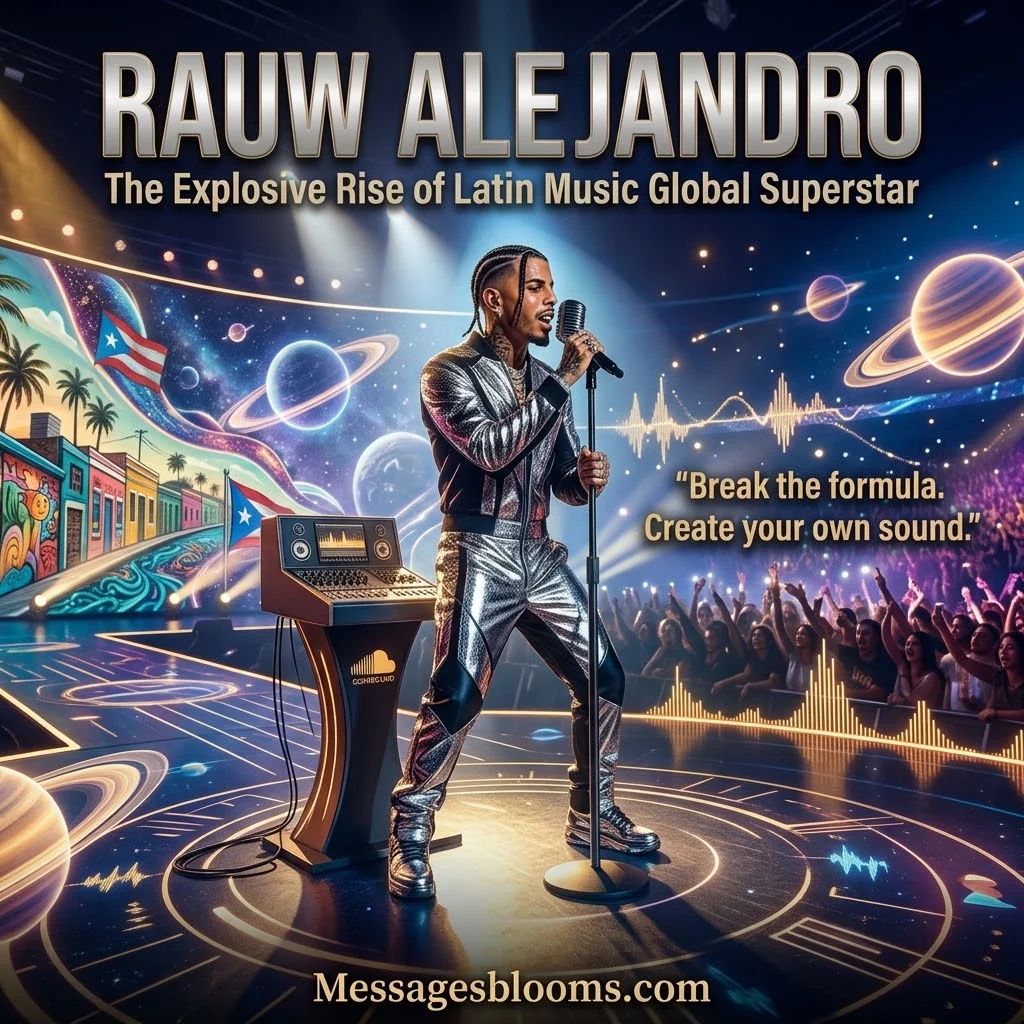
Rauw Alejandro transformed from an unknown SoundCloud artist into reggaeton’s biggest phenomenon in just a decade. This Puerto Rican sensation now commands billions of streams, sold-out arenas, and Grammy recognition redefining what it means to be a modern Latin music superstar.
Table of Contents
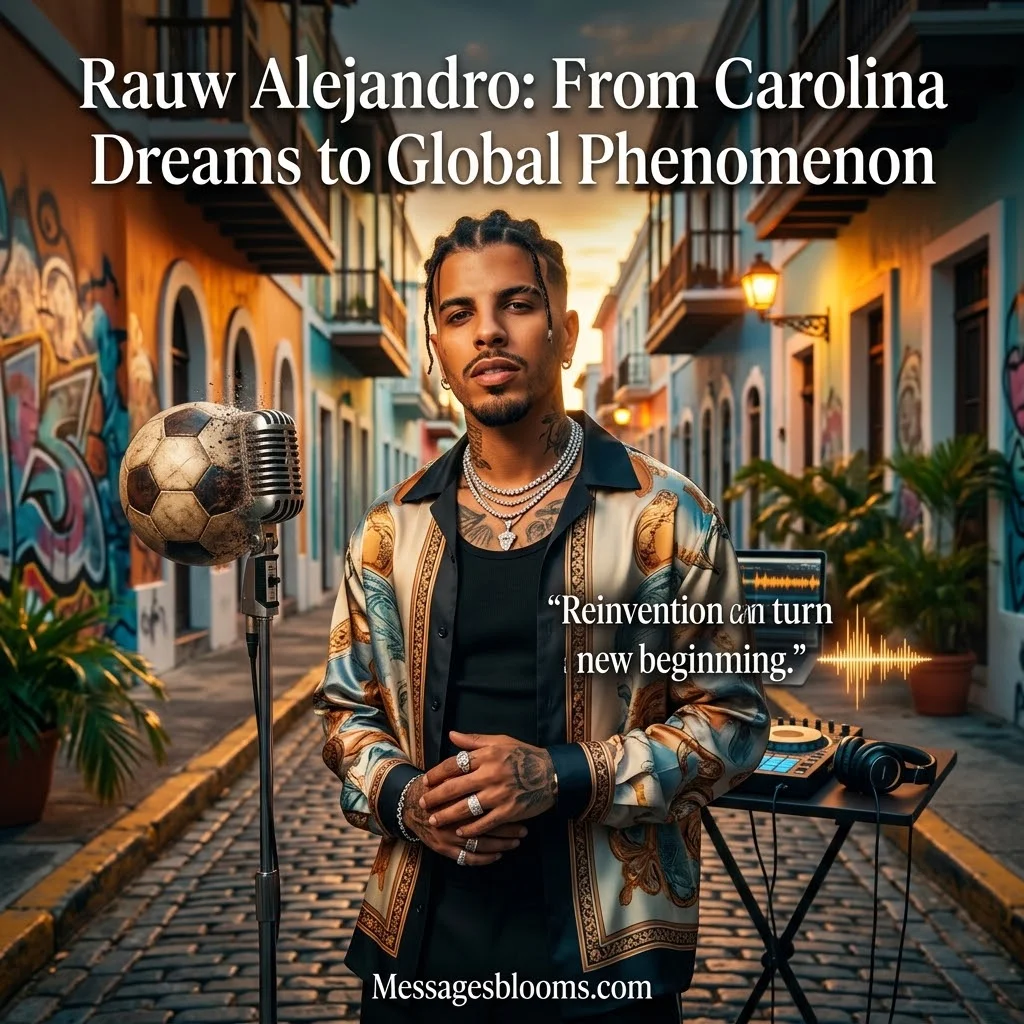
Rauw Alejandro: From Carolina Dreams to Global Phenomenon
Who is Rauw Alejandro, and how did a soccer player from Puerto Rico become the king of modern reggaeton? His story proves that reinvention, combined with authentic artistry, creates superstars.
Raúl Alejandro Ocasio Ruiz—known professionally as Rauw Alejandro—was born on January 10, 1993, in San Juan, Puerto Rico. He grew up in Canóvanas and Carolina, two municipalities in northern Puerto Rico surrounded by music from childhood. His father, Raúl Ocasio, was a guitarist. His mother, María Nelly Ruiz, sang backing vocals. This musical household exposed him to diverse influences: Elvis Presley, Michael Jackson, and Chris Brown.
But young Rauw had different dreams initially. He was an athlete first.
For years, he pursued professional soccer. He trained intensely, played for local clubs, and even represented Puerto Rico in international tournaments. Then came the moment that changed everything. An injury ended his athletic dreams, and opportunities on the island felt limited. “That moment broke me,” he’s reflected. But it also redirected his energy toward music—his true calling.
Unlike many reggaeton artists, Rauw credits his athletic discipline for his work ethic. That competitive drive and curiosity shaped how he approaches music. He wasn’t just making songs; he was training to be the best. This mindset separates him from typical urbano artists.
His childhood friendships also mattered. Anuel AA, now a massive reggaeton collaborator, was his classmate. They shared school experiences in Carolina. Years later, their childhood bond would translate into powerful musical partnerships, showing how local Puerto Rican networks built global empires.
By his early 20s, Rauw had made his choice. He began uploading music to SoundCloud in 2014. His focus wasn’t on fame—it was on craft. He experimented with sleek R&B mixed with reggaeton, inspired by Usher and Chris Brown. This fusion was bold. In reggaeton-dominated Puerto Rico, most artists stuck to traditional sounds. Rauw did something different. He was making R&B with an American flow—a sound the island wasn’t expecting.
His smooth voice and daring production caught attention quickly.
The Explosive Rise: From SoundCloud Underground to Reggaeton Royalty
The journey from bedroom producer to global superstar wasn’t instant—but it was inevitable. Understanding how Rauw Alejandro’s explosive rise happened reveals the power of consistency, innovation, and strategic collaboration.
Between 2014 and 2016, Rauw built a following in the SoundCloud underground. This era shaped countless Latin artists. The platform was democratic. It didn’t matter if you had a record deal. Your music spoke for itself. Rauw uploaded consistently, refined his sound, and gained a dedicated fanbase online.
His breakthrough moment came with “La Oportunidad” in 2016. This track showcased his distinctive blend of reggaeton, Latin pop, and urban rhythms. It proved he wasn’t just another reggaeton artist copying formulas. He had something fresh.
That same year, he released his debut mixtape, “Punto de Equilibrio” (November 2016). The project gained critical recognition. Music insiders started noticing the Puerto Rican prodigy with the unique sound.
But breaking through required business savvy, not just talent.
A neighbor gave Rauw a phone number for a manager named Eric Duars. Duars had worked with reggaeton legends like Zion Y Lennox and De La Ghetto. Rauw reached out. No response. He waited. He continued making music. Months passed. Then, by coincidence, they met at a trap concert where Rauw was performing with rapper Rafa Pabón. Rafa introduced them properly.
The connection stuck. After waiting another three months, Rauw signed to Duars Entertainment in January 2017. This was his official entry into the professional music industry.
The label deal changed his trajectory. Rauw continued collaborating with peers from the SoundCloud trenches. But now, he had industry backing. His work gained wider distribution. He learned the business side of music. By 2020, he was ready for his debut album.
“Afrodisíaco” dropped in November 2020. This album established Rauw as a major force.
It featured collaborations with J Balvin, Anuel AA, and Arcángel—all heavyweight names in Latin urbano music. Critics praised it. Fans loved it. It earned Gold certification in the United States and Colombia. More importantly, it earned a Grammy nomination for Best Música Urbana Album. At just 27 years old, Rauw proved he belonged among reggaeton’s elite.
But the real explosion was yet to come.
Musical Evolution & The Explosive Sound: Albums, Hits & Genre-Blending
How did Rauw Alejandro evolve from a reggaeton artist into a global pop phenomenon? Each album represents a calculated chapter in his artistic journey.
“Afrodisíaco” was the foundation. But Vice Versa, his second album (June 2021), changed everything.
The album marked a shift into romantic and pop territory. Rauw wanted to show range. He wanted to capture summer. He revealed: “I wanted this song—this whole album—to steal the whole summer.” He had only one week between finishing Afrodisíaco and starting Vice Versa. The creative urgency fueled innovation.
Then came “Todo De Ti” (May 2021).
This single became a cultural phenomenon. It’s an electro-tinged romantic pop jam that felt nothing like traditional reggaeton. The production was sleek. The lyrics were vulnerable. Rauw’s delivery was smooth yet energetic. The song dominated streaming platforms. It became the undisputed “song of the summer” worldwide.
Numbers speak volumes. “Todo De Ti” has surpassed 2 billion streams across platforms. It charted globally. It introduced Rauw to audiences who’d never heard reggaeton before. It proved that Latin music could reach mainstream audiences without losing authenticity.
His third album, “Saturno” (2022), explored futuristic reggaeton and dance influences. The concept was bold. Rauw created a fictional universe—a world called Saturno. The album sonically matched this vision. It felt like dance music from another dimension. The production was experimental. The visuals were cinematic.
The Saturno World Tour reflected this concept. Shows featured lasers, choreography, and charisma. Attendees didn’t just hear music; they experienced a spectacle. Rauw was performing concerts as full sensory experiences—closer to theater than traditional concerts.
His fourth album, “Cosa Nuestra” (2024), shifted direction again.
The title means “Our Thing” in Spanish. The album reconnected Rauw to his Puerto Rican roots. It was inspired by New York and Caribbean history. Rauw explored hip-hop, reggaeton, and island sounds. He was maturing artistically, looking backward to move forward.
Most recently, “Cosa Nuestra: Capítulo 0” (September 2025) deepened this connection. This project embraces traditional Puerto Rican music: bomba, plena, salsa, and bachata. But it does so within a contemporary framework. Rauw isn’t making historical music; he’s making modern music that honors history.
This album-by-albumevolution reveals his artistic philosophy.
He’s not chasing trends. He’s creating trends. He’s not staying in one lane. He’s exploring. Each project is bigger, bolder, and more intentional than the last. This is why Rauw Alejandro stands apart from other reggaeton superstars. He refuses to be boxed in.
His signature sound blends reggaeton, Latin R&B, urbano, Latin trap, pop, and dance. No other artist commands this combination so naturally. His smooth voice paired with daring production creates an unmistakable identity. When you hear Rauw, you know it’s him.
Global Impact Awards & The Rise of Latin Music New Generation
Rauw Alejandro’s global superstar status isn’t just about streams—it’s about industry recognition and cultural influence.
In 2021, Rauw won his first Latin Grammy Award. The category was Best Urban Fusion/Performance for “Tattoo Remix” with Colombian artist Camilo. This wasn’t luck. It proved that his genre-blending approach resonated with the Latin music industry’s most prestigious awards body.
He’s received four Latin Grammy nominations across his career. He’s also been nominated for Grammy Awards in major categories. These recognitions matter because they legitimize him among music peers and critics.
His commercial success matches his critical acclaim. Many of his hits have achieved Platinum and Multi-Platinum certifications in the United States, Latin America, and beyond. “Todo De Ti” achieved these certifications in multiple countries. His catalog collectively has been streamed billions of times across all platforms combined.
But numbers alone don’t capture his cultural impact.
Rauw Alejandro is often called the “King of Modern Reggaeton” for good reason. He’s the artist leading the new generation of Puerto Rican urban musicians. Artists like Daddy Yankee, Wisin y Yandel, and Zion y Lennox built reggaeton into a global force. Rauw carries that torch into the 2020s. He’s doing it differently—with pop sensibilities, genre-fluidity, and theatrical live shows.
His live performances set him apart fundamentally.
In 2019, Rauw sold out four consecutive nights at the Coliseo de Puerto Rico José Miguel Agrelot. This 18,500-seat arena is a rite of passage for reggaeton royalty. Selling out four nights proved his star power at home. It showed that Puerto Rico recognized one of their own.
His tours have evolved dramatically. The Saturno World Tour was a spectacle. The Costa Nostra Tour added live instrumentation and improvisation. These aren’t just reggaeton concerts. They’re immersive experiences. Rauw performs with live bands. He dances extensively. He uses choreography and visuals to tell stories. The stage becomes a character.
This approach attracts different audiences. Older fans appreciate the musicianship. Younger fans embrace the energy. Non-Hispanic audiences connect with the production quality. Rauw’s live shows have become must-see events, not just reggaeton concerts.
Collaborations matter too. His work with J Balvin, Anuel AA, and Camilo elevates him. These aren’t desperate features; they’re mutual respect between top artists. Each collaboration introduces Rauw to new audiences while reinforcing his status among peers.
Rauw Alejandro represents Latin music’s new generation precisely because he refuses old definitions. He’s not just a reggaeton artist. He’s not just a Latin R&B artist. He’s not just a dancer or performer. He’s all of these things simultaneously, creating something entirely new.
FAQs
Who is Rauw Alejandro and what makes him a Latin music superstar?
Rauw Alejandro is a Puerto Rican singer, songwriter, and performer who emerged as the leading figure of the new generation of Latin artists. Known as the “King of Modern Reggaeton,” he gained international acclaim by blending reggaeton, Latin R&B, urbano, Latin trap, and pop into his signature sound. With multiple Grammy nominations, Latin Grammy wins, and billions of global streams, he’s become one of the most influential Latin music superstars of the 2020s. What distinguishes him is his refusal to stay in one musical lane—each album represents artistic evolution.
What is Rauw Alejandro’s real name?
His real name is Raúl Alejandro Ocasio Ruiz. Professionally, he’s known as Rauw Alejandro. He also uses alternate stage names including “El Zorro” (The Fox) and “Rauleeto” (a playful variation of his name).
How old is Rauw Alejandro and when was he born?
Rauw Alejandro was born on January 10, 1993, making him 33 years old as of 2026. This means he’s been active in the music industry since 2014—approximately 12 years of professional work compressed into a meteoric rise.
When and where was Rauw Alejandro born?
Rauw Alejandro was born on January 10, 1993, in San Juan, Puerto Rico. His birthplace carries cultural significance. San Juan is Puerto Rico’s capital and cultural hub. However, he grew up primarily in Canóvanas and Carolina, two municipalities that shaped his identity and musical perspective.
Where is Rauw Alejandro from and what’s his cultural background?
Rauw Alejandro is from San Juan, Puerto Rico, specifically the northern municipalities of Canóvanas and Carolina where he spent his formative years. His cultural background is deeply Puerto Rican. His parents introduced him to music from childhood. His father is a guitarist, and his mother sang backing vocals. He grew up surrounded by reggaeton, R&B, and Caribbean music. Today, despite his global success, he maintains strong cultural ties to Puerto Rico, regularly referencing the island in his music and continuing to perform there.
Conclusion
Rauw Alejandro’s explosive rise from SoundCloud uploads to global superstar represents something bigger than one artist’s success story. It’s the evolution of Latin music itself. It’s proof that genre-boundaries are dissolving. It’s evidence that Puerto Rican artists continue leading the global music conversation.
He didn’t become a reggaeton superstar by copying formulas. He became one by breaking them. He didn’t reach billions of streams by chasing trends—he created them. His journey from athlete to artist, from underground producer to modern reggaeton king, offers lessons about authenticity, consistency, and fearless innovation.
Sohail John is a creative SEO content writer who crafts engaging, humorous, and audience-focused digital content. He specializes in writing viral blog posts, catchy headlines, and social media captions that attract readers and improve search engine performance. His writing style combines clarity, creativity, and entertainment to deliver high-quality content that boosts engagement and builds strong online presence for websites and brands.