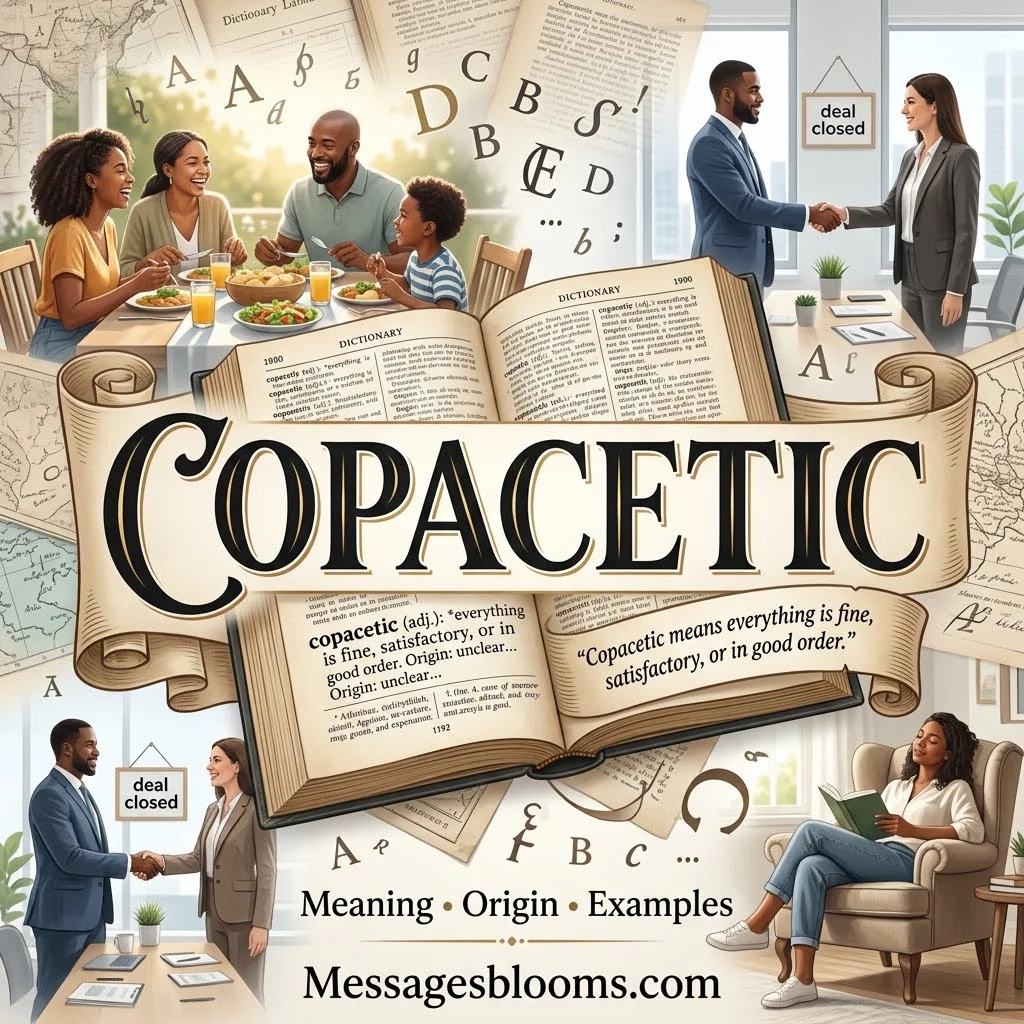
Copacetic meaning in plain words: fine, satisfactory, or in good order. It is an informal adjective that Americans use to say, “All is well.”
This guide covers the copacetic definition, its mysterious origin, real-life examples, and synonyms. You will also find the common spellings and quick answers to top questions.
Table of Contents
What Does Copacetic Mean? Definition, Tone & Pronunciation
Copacetic is a small word with a relaxed feel. Here is what it means and how to say it.
What does copacetic mean? Copacetic means fine, satisfactory, or in good order. Dictionary.com calls it a somewhat dated slang word for a situation, mood, or relationship with no problems.
Copacetic pronunciation: Say it as koh-pah-SET-ik. It has four syllables, and the stress falls on the third.
The strength of the word: The meaning of copacetic ranges from “just fine” to “excellent.” Context sets the level. “The meeting was copacetic” means it went well. “The band sounded copacetic tonight” means it sounded great.
Everything is copacetic: This is the most common phrase. People use it for reassurance. It tells a worried listener that nothing is wrong.
What copacetic can describe: A mood, a friendship, a plan, or a group gathering. Dictionary.com notes it can even describe the harmony in a piece of music.
The tone of copacetic: It sounds calm and easygoing, with a touch of vintage charm. Think of a nod and a small smile.
Where to use it: Copacetic is informal, so it fits chats, stories, and casual emails. It is more common in American English than British English. Skip it in academic or formal writing.
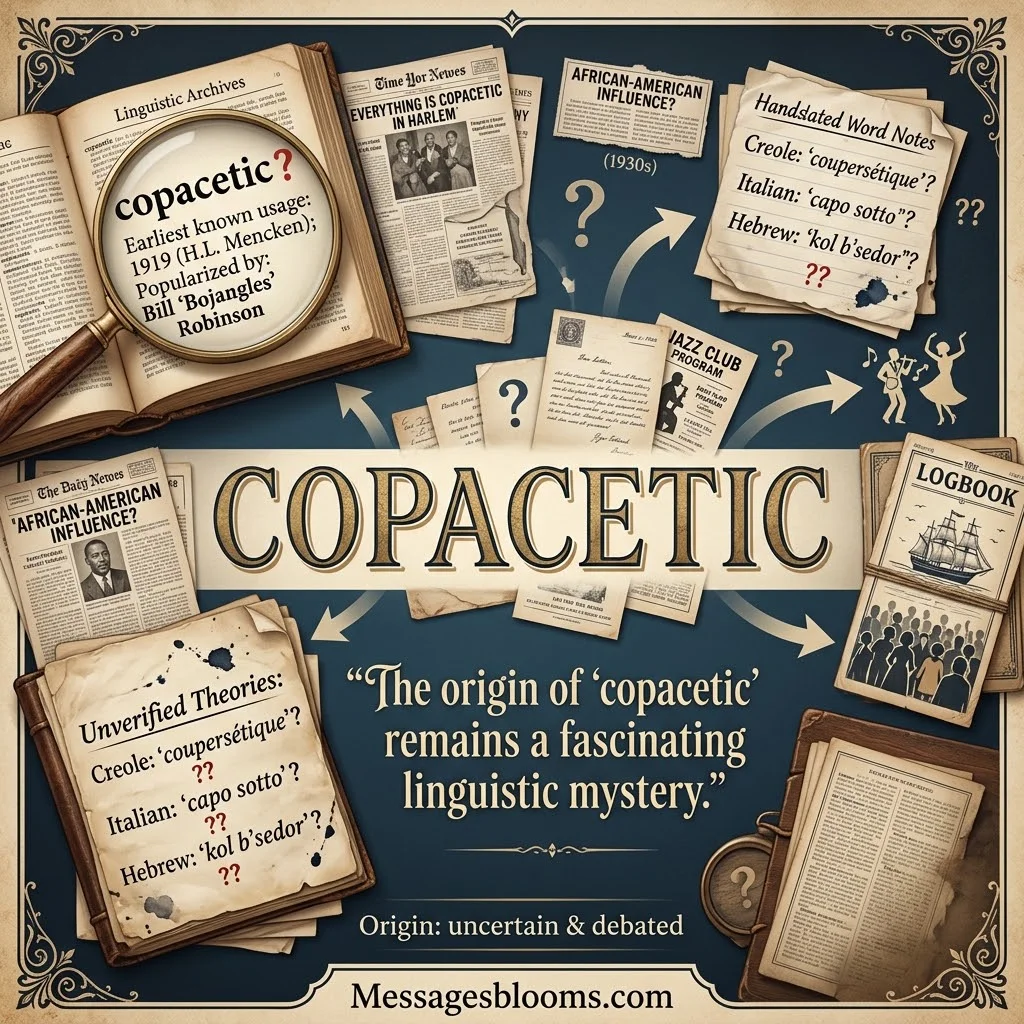
The origin of copacetic is a real puzzle. Word historians have several theories but no proof.
Earliest use: Grammarly notes that the first written record dates to 1919. Dictionary.com says the word has been in common use since around 1920.
The leading theory: Many sources point to Southern African American speech from the late 1800s or early 1900s. One widely repeated claim links it to the tap dancer Bill “Bojangles” Robinson, who helped make it famous.
Other theories: Each of these has supporters.
Cajun French: from coup esètique, meaning able to cope with anything.
Chinook Jargon: from copasenee, meaning everything is satisfactory.
Italian speakers in New York: from a word like copasetti.
Hebrew: from kol b’tzedek, a theory some word writers mention.
Why it is still unsolved: The American Heritage Dictionary lists the origin as unknown. Slang is spoken long before it is written down. That leaves few records to trace.
How to Use Copacetic in a Sentence: Real-Life Examples
The best way to learn copacetic in a sentence is to see it in real situations. These examples are casual, as the word is.
At work:
“The client call ran long, but the deal is copacetic.”
“Our schedules clashed, but we sorted it out. We’re copacetic now.”
In relationships:
“We argued last night, but we talked it through. Everything is copacetic.”
“Are we copacetic after that mix-up?”
Plans and events:
“The venue changed at the last minute, yet the party stayed copacetic.”
“Don’t stress about the budget. Everything’s copacetic.”
Text messages:
“Landed safe. All copacetic here.”
“Car’s fixed. We’re copacetic.”
Ironic or negative use: Add “not” and the meaning flips. “Things were not copacetic after the meeting” means something went wrong.
Common mistakes: Don’t overuse it in formal writing. Don’t misspell it, either. The next section covers the correct spelling.
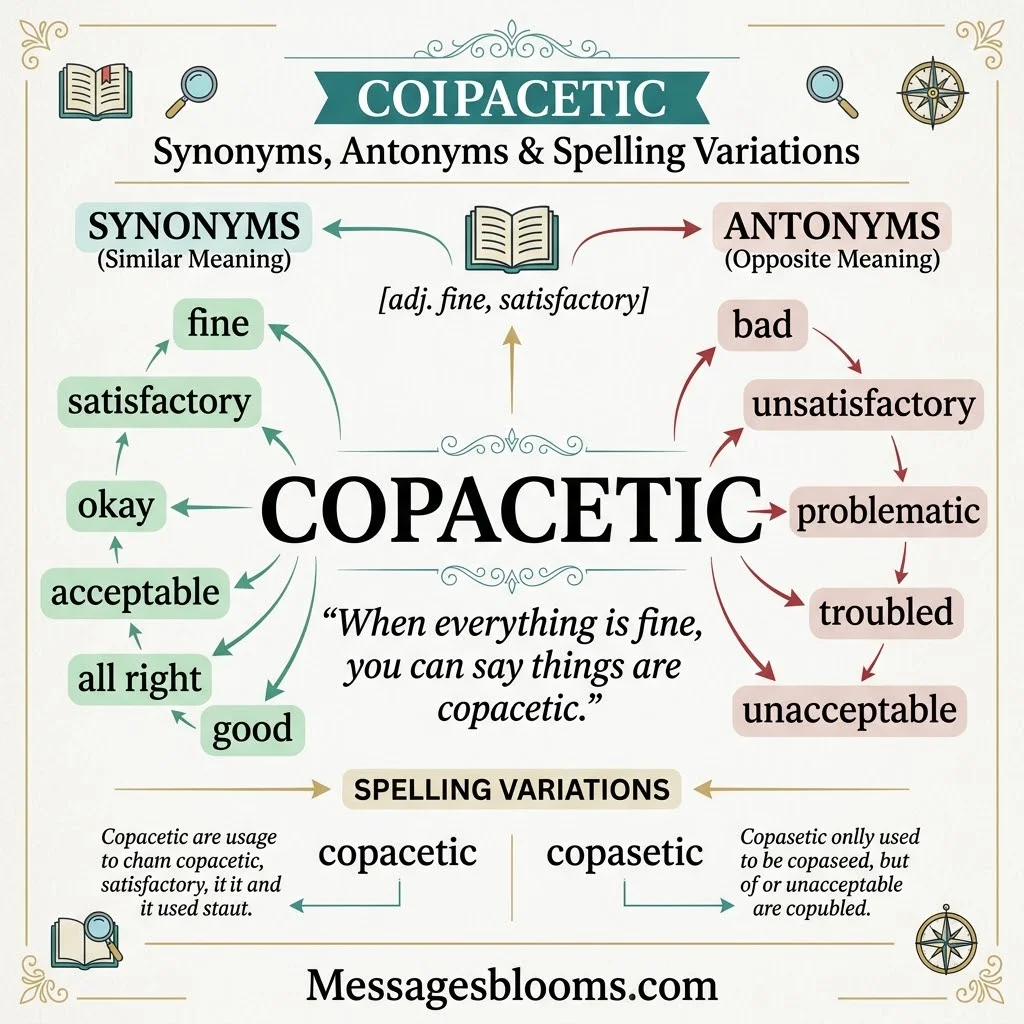
Copacetic has plenty of synonyms, and each one has its own feel. Here is how to choose.
Copacetic synonyms:
Synonym
Example
Fine
“The engine sounds fine now.”
Okay
“Is the plan okay with you?”
All right
“He’s all right after the fall.”
Satisfactory
“The terms are satisfactory.”
Acceptable
“We reached an acceptable deal.”
In order
“Your paperwork is in order.”
Copacetic antonyms: Opposite words include unsatisfactory, amiss, troubled, and out of order.
Copacetic vs. fine vs. okay: “Fine” is neutral and works anywhere. “Okay” is the most basic. “Copacetic” is warmer and a bit playful, with a retro flavor.
Copacetic spelling: The standard spelling is copacetic. Four variants also exist: copasetic, copesetic, copesthetic, and copesettic. Merriam-Webster lists copasetic and copesetic as acceptable, though less common. Grammarly adds that the OED and the American Heritage Dictionary list only copasetic as an alternative, while Collins lists copesettic. Stick with copacetic. All major dictionaries recognize it.
FAQs
What does copacetic mean?
Copacetic means fine, satisfactory, or in good order. It is an informal adjective, common in American English. People use it to say that things are going well or that a problem is solved.
What is the exact meaning of copacetic?
The exact meaning of copacetic is “very satisfactory” or “completely fine.” Dictionaries list it as an informal adjective. Its strength runs from “just fine” to “excellent,” depending on the context.
Is copacetic a positive word?
Yes, copacetic is a positive word. It describes things that are fine or going well. Its tone is mild and relaxed. Adding “not” or using it with irony can turn the meaning negative.
How do you use copacetic in a sentence?
Use copacetic to say something is fine. For example: “The schedule changed, but everything is copacetic.” It works best in casual speech, texts, and stories. Avoid it in formal or academic writing.
What is the origin of the word copacetic?
The origin of copacetic is uncertain. The first written record dates to 1919. Leading theories point to Southern African American speech, with Cajun French, Chinook Jargon, and Italian-American speech as other possible roots.
Conclusion
Copacetic meaning comes down to one idea: everything is fine. It is an informal, friendly word with a mysterious past and a steady place in American speech. Use it in casual talk, keep it out of formal writing, and spell it copacetic.
Sohail John is a creative SEO content writer who crafts engaging, humorous, and audience-focused digital content. He specializes in writing viral blog posts, catchy headlines, and social media captions that attract readers and improve search engine performance. His writing style combines clarity, creativity, and entertainment to deliver high-quality content that boosts engagement and builds strong online presence for websites and brands.