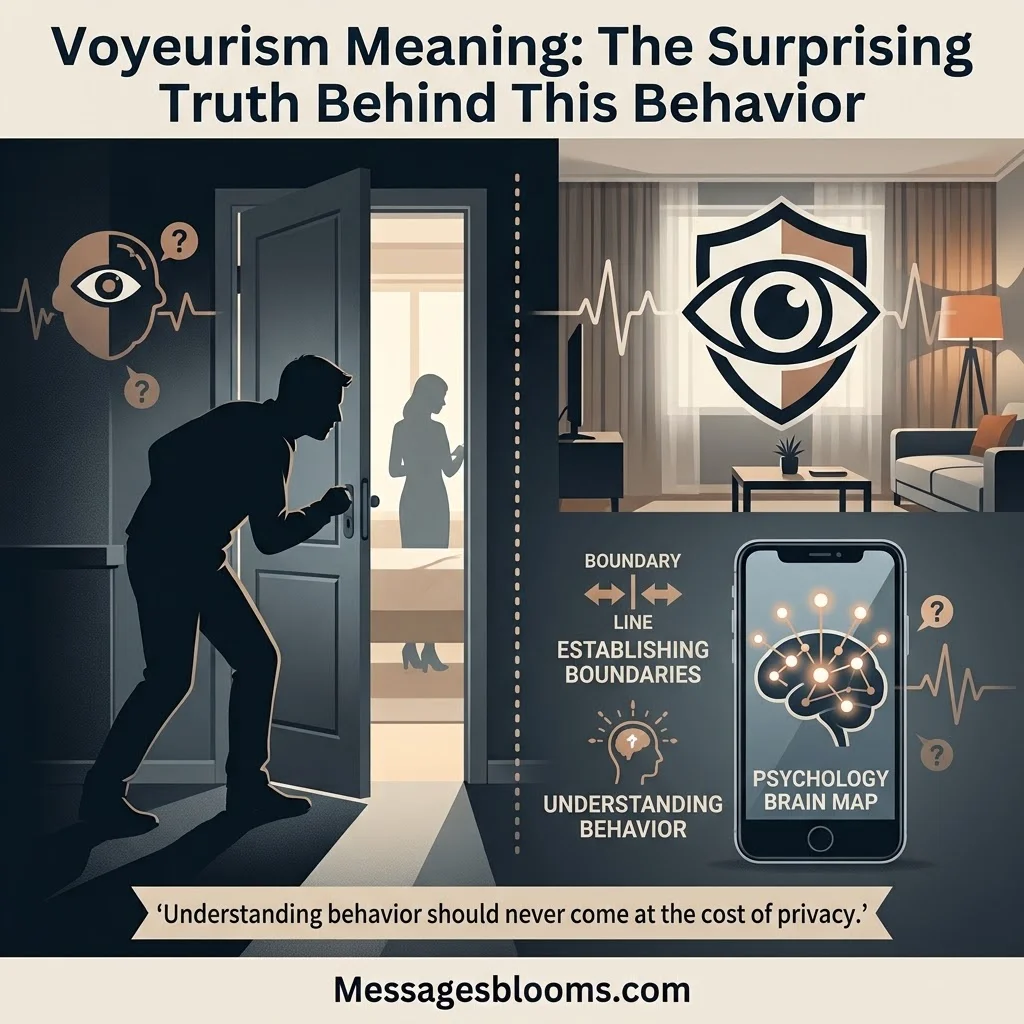
What is voyeurism? It means getting a thrill from secretly watching others in private or intimate moments. The watcher does not take part. They only look.
The surprising part is that the word has two sides. One is clinical and sexual. The other is a mild, everyday kind of secondhand excitement. This guide covers the meaning of voyeurism, real examples, causes, and US law.
Table of Contents
What Is the Voyeurism Meaning?
Voyeurism is the act of watching people in private situations, usually in secret, for sexual gratification. The people being watched do not know or agree.
What does voyeurism mean in simple terms? It means a voyeur gets excited by watching, not by doing. The word is voyeuristic when it describes this kind of behavior.
The word came from French voyeur, meaning “one who sees.” It comes from voir, “to see,” which traces back to Latin vidēre. The word voyeur was first recorded in English around 1915–20. Voyeurism itself appeared in 1924, as another word for scopophilia.
The word also has a looser meaning. People use it for gaining pleasure from watching the private lives and problems of others. That is not the same as the clinical sense.
It also helps to separate it from similar ideas:
- Surveillance is watching for safety or control.
- Curiosity is a normal interest in people.
- Voyeurism is watching for arousal, without consent.
A peeping Tom is the classic image of a voyeur.
Voyeurism Examples in Real Life
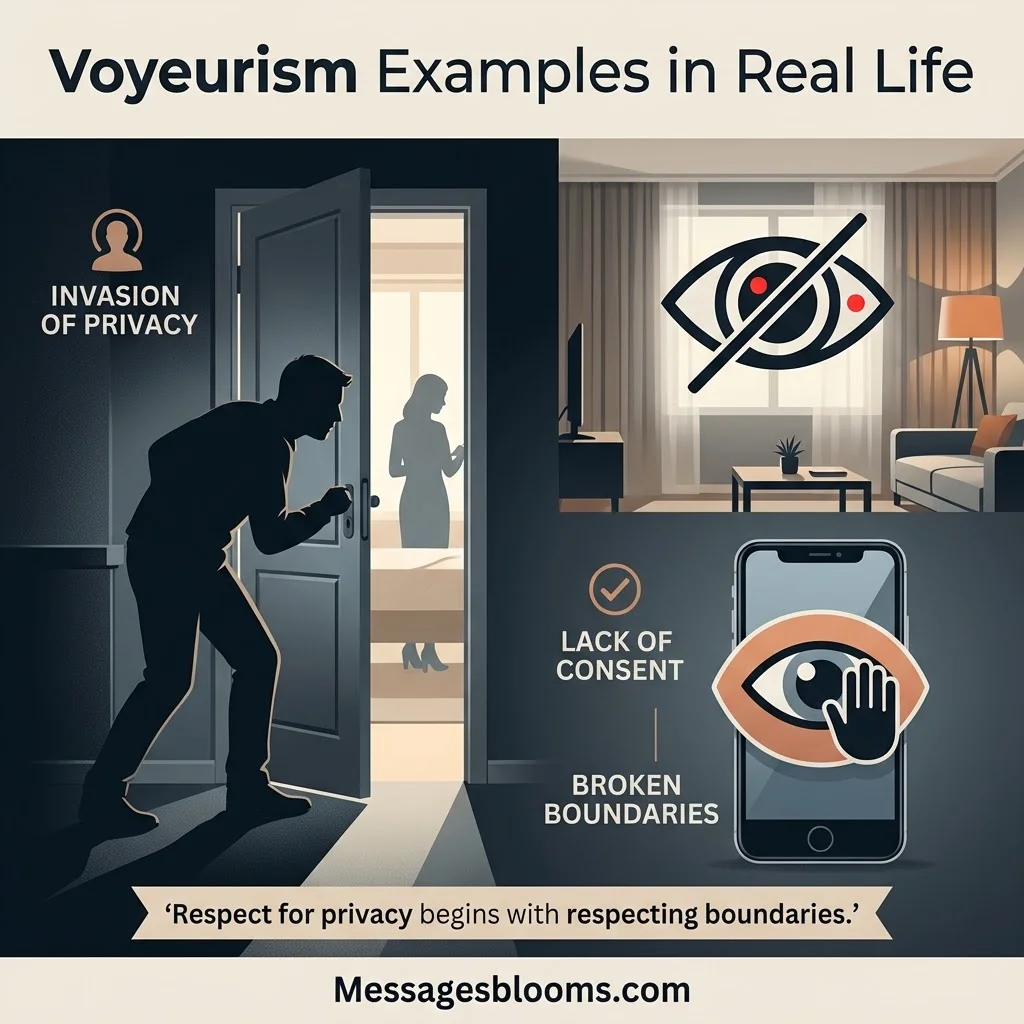
Voyeurism shows up in old and new forms. Some are crimes. Others are just cultural habits.
What is an example of voyeurism? A peeping Tom secretly watching someone through a window is the textbook case.
Modern examples are more common today:
- A hidden camera in a rental, bathroom, or changing room.
- Secretly recording someone who is undressing.
- Sharing private images without the person’s consent.
Everyday, non-sexual examples are milder. A “real estate voyeur” scrolls through strangers’ home photos for fun. Fans can also feel voyeuristic when they binge true crime or reality TV.
The key difference is consent. Adults who agree to be watched, as in exhibitionism, are not victims. Watching someone who does not know is a privacy violation.
Why Do People Show Voyeuristic Behavior?
People show voyeuristic behavior for several reasons. Researchers point to arousal from watching, the thrill of secrecy, and the risk of being caught.
Curiosity about others is normal. Most people with voyeuristic urges never act on them harmfully.
Is voyeurism considered a mental disorder? Sometimes, but not always. It becomes voyeuristic disorder only when strict clinical rules are met. The DSM-5-TR is the manual doctors use for this. It requires at least six months of intense arousal from watching an unsuspecting person who is naked, undressing, or having sex. The person must also have acted on the urges with a non-consenting person, or feel serious distress or impairment. They must be at least 18.
The numbers are worth knowing. In one population-based study, about 12% of males and 4% of females reported at least one episode of voyeuristic behavior. Most people with these behaviors do not meet the criteria for the disorder. You can read more in the Merck Manual’s guide to voyeuristic disorder.
Warning signs include compulsive behavior, ignoring consent, and taking bigger risks over time. A licensed mental health professional can help.
While exploring the psychology behind voyeurism, it’s interesting to see how meanings can carry very different emotional and cultural associations. If you’re curious about the meaning and significance of Carino, discover its origin, symbolism, and the beautiful ideas associated with this distinctive term.
Voyeurism Laws and Effects in the USA

Watching or recording someone without consent is illegal in the US. The exact rules depend on where you live.
At the federal level, the Video Voyeurism Prevention Act of 2004 applies. It covers capturing an image of a private area of a person without consent, where they expect privacy, in the special maritime and territorial jurisdiction of the US. The penalty is a fine, up to one year in prison, or both. The full text is at 18 U.S.C. § 1801.
Many states also have their own voyeurism and “peeping Tom” laws, and the details vary. Voyeuristic behaviors are among the sexual behaviors most likely to involve law enforcement.
For victims, the harm is real. It can cause anxiety, shame, and a lasting loss of trust.
What should you do if you are a victim?
- Save the evidence, such as screenshots and dates.
- Report it to local police.
- Ask the website or app to remove the images.
- Use StopNCII.org to help block private images from spreading online.
To protect your privacy, check rentals and changing rooms for hidden cameras. Cover or secure webcams too.
FAQs
What is the meaning of voyeurism?
Voyeurism means getting pleasure, often sexual, from secretly watching others in private moments. The watcher is usually hidden, and the people being watched have not agreed. It can also describe a milder, non-sexual interest in other people’s private lives.
What does voyeurism mean in simple terms?
In simple terms, voyeurism means getting a thrill from secretly watching people. The voyeur watches instead of taking part. Because the other person has not given consent, it is a privacy violation.
What is the definition of voyeurism?
The voyeurism definition is the practice of getting sexual gratification by secretly watching people undress or engage in sexual acts. In a looser sense, it means enjoying other people’s private lives from a distance.
What is an example of voyeurism?
A common example of voyeurism is a peeping Tom secretly watching someone through a window. A modern example is hiding a camera in a bathroom or rental. Both involve watching or recording a person without their knowledge.
Is voyeurism considered a mental disorder?
Not always. Voyeuristic disorder is a clinical diagnosis, and it requires meeting DSM-5-TR criteria. These include six months of intense urges, plus acting on them without consent or serious distress. Most people with voyeuristic behavior do not meet them.
Conclusion
Voyeurism meaning comes down to one idea: watching others in private without their consent. It can be a clinical issue, a crime, or just a loose label for nosy curiosity.
The line is always consent. If someone is being watched or recorded without knowing, it crosses into a privacy violation, and US law can step in.

Sohail John is a creative SEO content writer who crafts engaging, humorous, and audience-focused digital content. He specializes in writing viral blog posts, catchy headlines, and social media captions that attract readers and improve search engine performance. His writing style combines clarity, creativity, and entertainment to deliver high-quality content that boosts engagement and builds strong online presence for websites and brands.