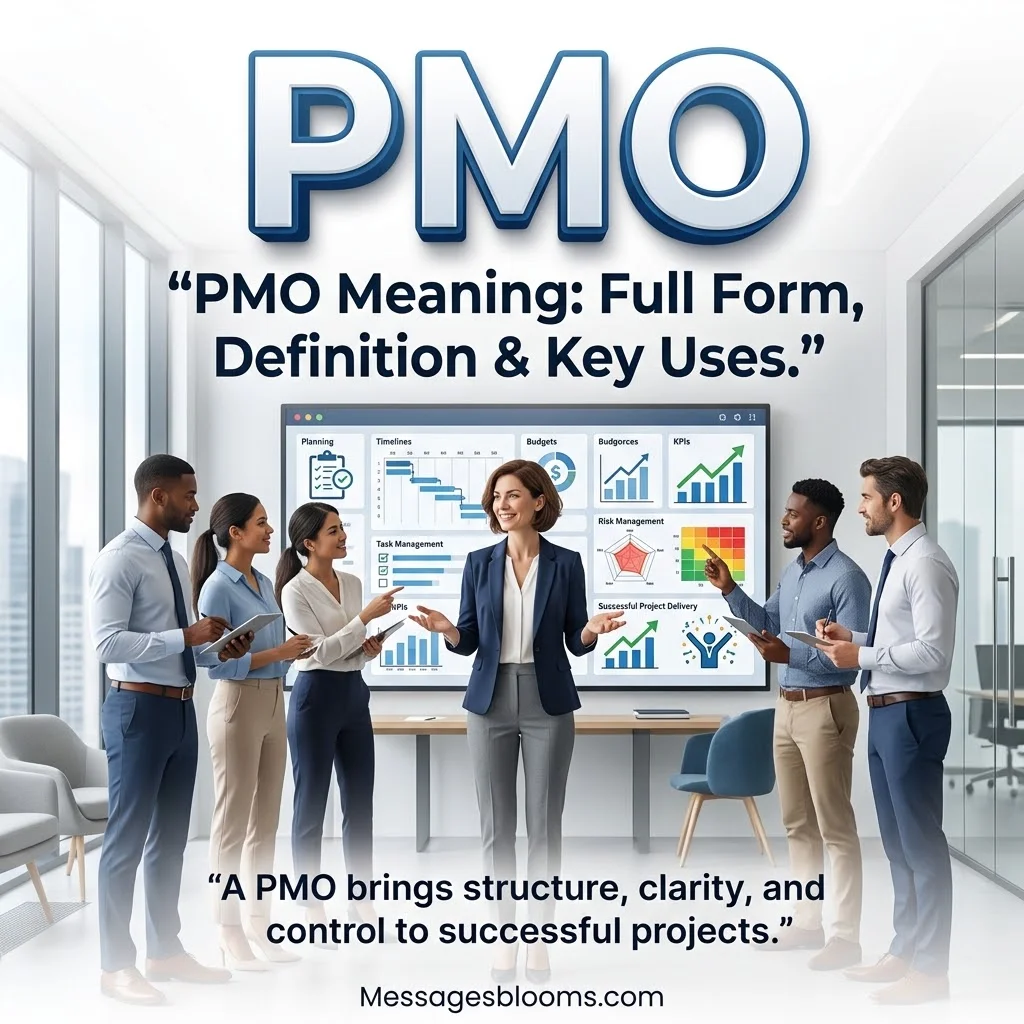
PMO meaning is simple. It stands for Project Management Office, a team that sets the rules for how projects get done.
You will see the term in US businesses, government agencies, hospitals and tech firms. This guide covers the PMO full form, its definition, its types and its everyday uses.
Table of Contents
PMO Full Form and What It Stands For
The full form of PMO is Project Management Office. Some firms use the same letters for Program Management Office or Portfolio Management Office.
What does PMO stand for in each case?
Project Management Office: guides and supports individual projects.
Program Management Office: coordinates a group of related projects.
Portfolio Management Office: picks and ranks projects by business value.
Context matters, because the letters have other meanings too. In texting, PMO is slang, and it is often an annoyed “piss me off.” In some countries, it is the Prime Minister’s Office. In US food safety, it is the Pasteurized Milk Ordinance.
For this article, PMO always means the business term.
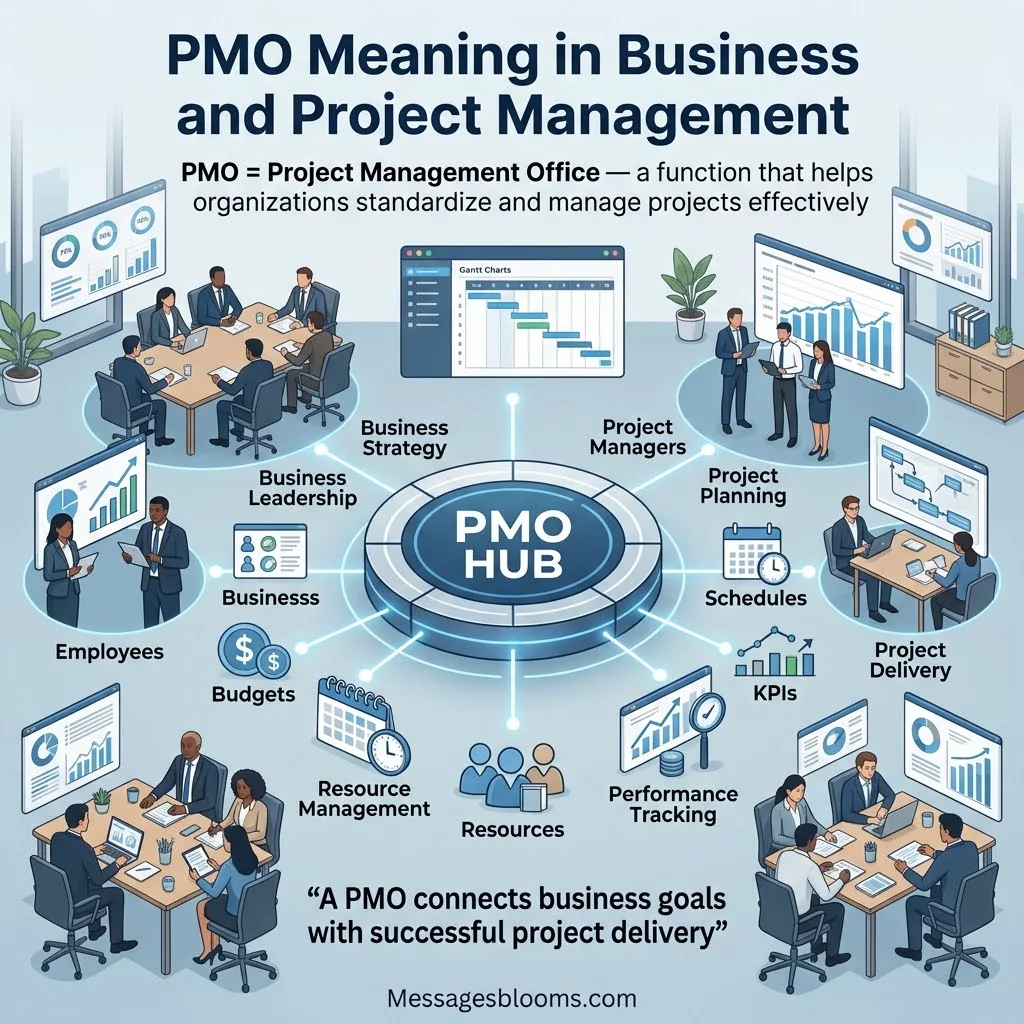
PMO Meaning in Business and Project Management
A PMO is the central unit that sets standards, tracks progress and keeps projects tied to company goals. Think of it as the control tower at an airport. The pilots (project managers) fly the planes. The tower keeps every flight safe and on schedule.
What is PMO meaning in business? It is a department that defines how the company runs projects. It also checks that each project supports the business strategy.
What is PMO meaning in project management? It is the group that provides methods, templates, training and reporting to project teams. Common methods include Agile, Waterfall and the PMBOK guide.
PMOs are common. The Wellingtone State of Project Management Report 2025 found that 82% of organizations run at least one PMO.
A PMO and a project manager do different jobs:
PMO
Project Manager
Scope
Many projects
One project
Focus
Standards and governance
Daily delivery
Goal
Company-wide success
Project success
Reports to
Senior leaders (often the CIO, COO or CEO)
PMO or department head
Types of PMOs: Supportive, Controlling and Directive
PMOs differ mainly in how much control they hold. Most fall into three types.
Type
Control Level
What It Does
Best For
Supportive PMO
Low
Shares templates, training and advice
Teams that want freedom
Controlling PMO
Medium
Requires teams to follow set methods
Regulated industries
Directive PMO
High
Runs projects directly
Complex or high-risk work
PMOs also differ by reach. A project-specific PMO serves one project. A departmental PMO serves one business unit. An enterprise PMO (EPMO) covers the whole company. CIO.com notes that Gartner also groups PMOs into four styles: activist, delivery, compliance and centralized.
Which PMO type is best? A young company with a few projects usually does well with a supportive PMO. A firm with strict compliance needs often picks a controlling one. Large programs with high stakes lean toward a directive one.
Just as PMO can have different meanings depending on the context, Spanish words can also carry nuanced meanings beyond their direct translations. Understanding the meaning of “plancha” in Spanish offers a fascinating example of how context shapes language.
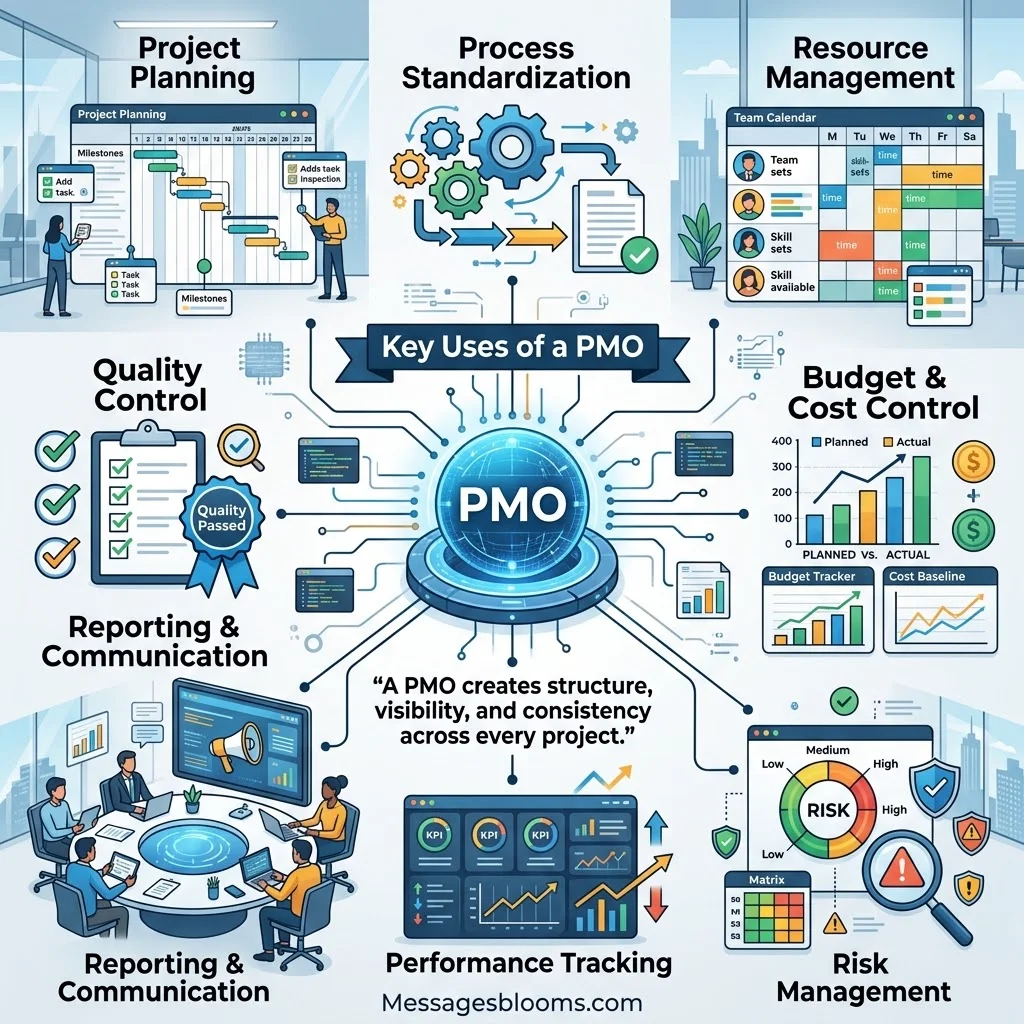
Key Uses of a PMO
A PMO helps a company deliver the right projects, the right way. Its main uses are easy to list.
Project governance: sets rules and checks that teams follow them.
Strategic alignment: links every project to a business goal.
Resource management: assigns people and budget where they matter most.
Risk management: spots problems early and plans a fix.
Reporting and transparency: gives leaders clear, current data on KPIs and costs.
Training: builds skills and shares lessons learned.
What are the benefits of a PMO? Better project success rates, fewer budget overruns, faster decisions and less wasted effort.
PMOs show up across US industries. Software firms use them to manage releases. Hospitals use them for system upgrades. Construction companies track budgets and schedules. Federal agencies and defense contractors use them to meet strict compliance rules.
How do you know if you need a PMO? Look for these signs:
Projects often miss deadlines or run over budget.
Teams use different methods and tools.
Leaders can’t see the real status of projects.
Projects don’t connect to company goals.
PMOs face hurdles too. Common ones are resistance to change, weak executive support and trouble proving ROI. Clear goals and strong leadership backing solve most of them.
Modern PMOs are changing. Many now use AI-driven analytics to predict risk, hybrid methods that mix Agile and Waterfall, and cloud tools for remote teams.
PMOs also open career paths. Project managers can move into PMO roles, and credentials like PMP, PgMP and PMO-CP help. PMI explains the path from project manager to PMO leader.
PMO FAQs
What does PMO mean?
PMO most often means Project Management Office. It is a team inside an organization that sets project standards, tracks progress and supports project managers. In casual texting, PMO can also be slang with a different meaning.
What is the full form of PMO?
The full form of PMO is Project Management Office. Depending on the company, it can also mean Program Management Office or Portfolio Management Office. Each version manages projects at a different level.
What does PMO stand for?
PMO stands for Project Management Office. The letters name a department that creates project rules, offers tools and training, and keeps projects tied to business goals.
What is PMO meaning in business?
In business, a PMO is a central unit that defines how projects are planned and run. It aligns projects with company strategy, manages resources and reports results to leaders. Its goal is to deliver projects on time and on budget.
What is PMO meaning in project management?
In project management, a PMO is the group that provides methods, templates, governance and reporting to project teams. It supports project managers and keeps work consistent across many projects.
Conclusion
PMO meaning comes down to one idea. A Project Management Office brings order, clarity and strategy to how a company runs its projects. Whether you lead a team, run a business or are building your career, knowing the PMO definition is a smart first step. For more detail, TechTarget’s definition is a good next read.
Sohail John is a creative SEO content writer who crafts engaging, humorous, and audience-focused digital content. He specializes in writing viral blog posts, catchy headlines, and social media captions that attract readers and improve search engine performance. His writing style combines clarity, creativity, and entertainment to deliver high-quality content that boosts engagement and builds strong online presence for websites and brands.