You have seen it on menus, in magazines, and in font lists. Sans meaning is simple: the word means “without.”
Writers use it to add a little style. This guide covers its definition, French roots, usage, and the sans serif link.
Table of Contents
What Does Sans Mean in English?
In English, sans is a preposition that means “without” or “in the absence of.” It sounds a bit playful, so it stands out.
What is the actual meaning of sans? It means something is missing. “Tea sans sugar” means tea with no sugar.
Here is how to say it. The pronunciation in US English is /sænz/, which sounds like “sanz.” Some speakers say “sahn,” closer to the French sound.
The word has a second job. As a noun, sans is short for sans serif, a type of font. The plural stays “sans.”
Dictionaries label the word as literary or humorous. You will not hear it much in daily speech. Most Americans say “without” when they talk.
You will still see sans in print. News writers use it in stories on food, beauty, weather, and travel. One CNN report said beginning snowboarders sans wrist guards were four times more likely to hurt a wrist.
Close synonyms include without, lacking, minus, and free of. The antonym is with.
Sans Meaning in French and Word Origin
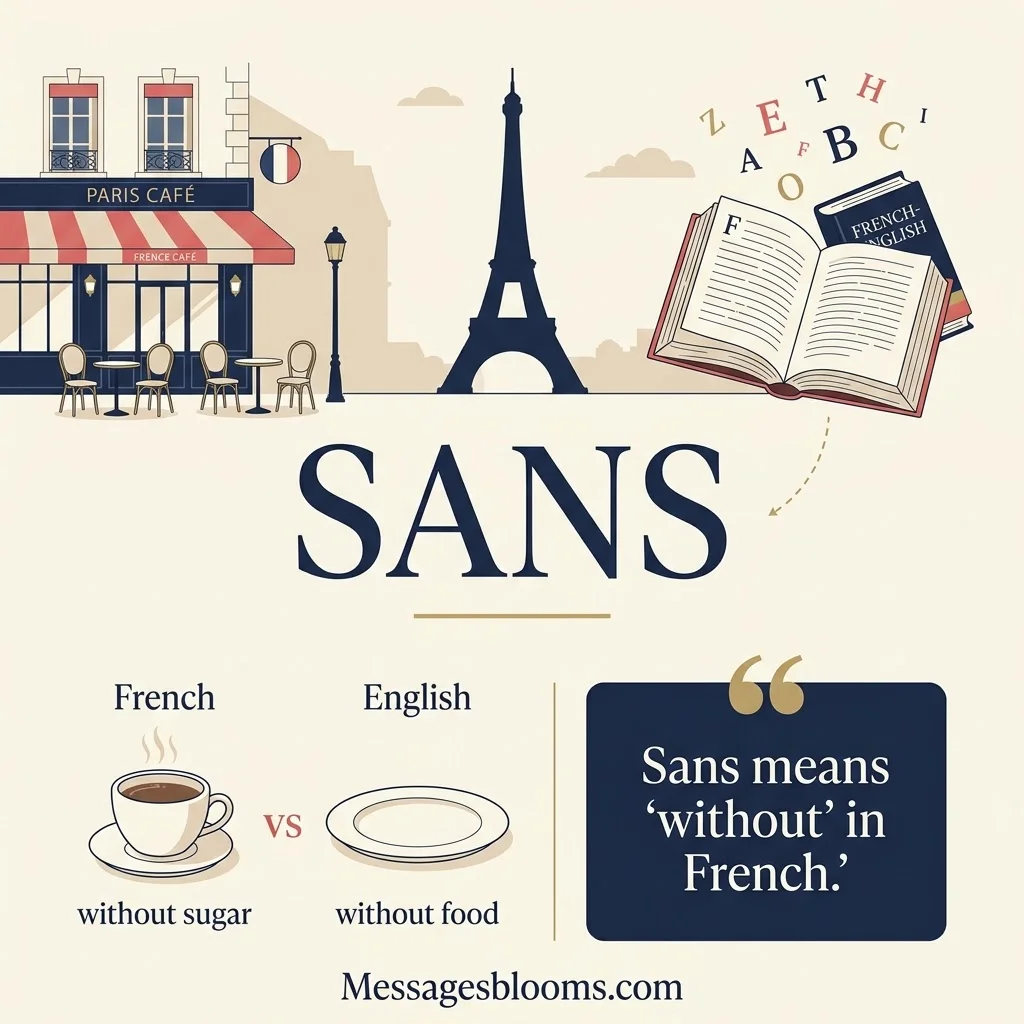
Sans is a borrowed word. English took it from French, and the French meaning has not changed.
What does sans mean in French? It means “without,” and French speakers use it daily. A café order might be “un café sans lait,” which means coffee with no milk.
In French, the word has a soft nasal vowel. It sounds like “sahn,” with no hard “z” at the end.
The word origin goes back a long way. It starts with the Latin word sine, which means “without.” Latin absentia, meaning “in the absence of,” also shaped it.
From there, the word moved through Old French sanz and Anglo-French san. It reached Middle English as saun or sans.
Records show the word entered English in the 14th century. Another source dates its first recording to 1275–1325. So it is over 700 years old.
Shakespeare helped keep it alive. In As You Like It, he wrote “sans teeth, sans eyes, sans taste, sans everything.”
Other French phrases use the word too:
- Médecins Sans Frontières is the French name of the medical charity known in English as Doctors Without Borders.
- Sans-culotte was a name for working-class radicals in the French Revolution. It means “without knee breeches.”
How to Use Sans in a Sentence
Using sans is easy. Put it before a noun or noun phrase, just like “without.”
How do you use sans in a sentence? Follow this pattern: sans + noun. Here are some examples:
- I ordered the burger sans pickles.
- She arrived at the party sans her coat.
- He wrote the whole report sans help.
- Clear skies, sans wind, are expected on Sunday.
The word works best when the tone is light. It fits a menu note, a caption, or a joke. It also suits a magazine article.
Be careful with a few things:
- Avoid it before an -ing verb. Say “left without saying goodbye.” Do not say “left sans saying goodbye.”
- Skip it in serious or plain writing. Emails, school essays, and instructions read better with “without.”
- Don’t overuse it. One sans in a paragraph is plenty.
Does sans mean “without”? Yes. The meaning is the same. The only difference is register: sans sounds fancy or witty, and without sounds natural.
Language is full of fascinating words, from classic expressions like “sans” to modern internet slang that goes viral overnight. If you’re curious about the meaning of popular Gen Z slang like Sybau, discover its surprising origins, hidden meaning, and how people use it in online conversations.
Sans Serif, Comic Sans, and Other Common Uses
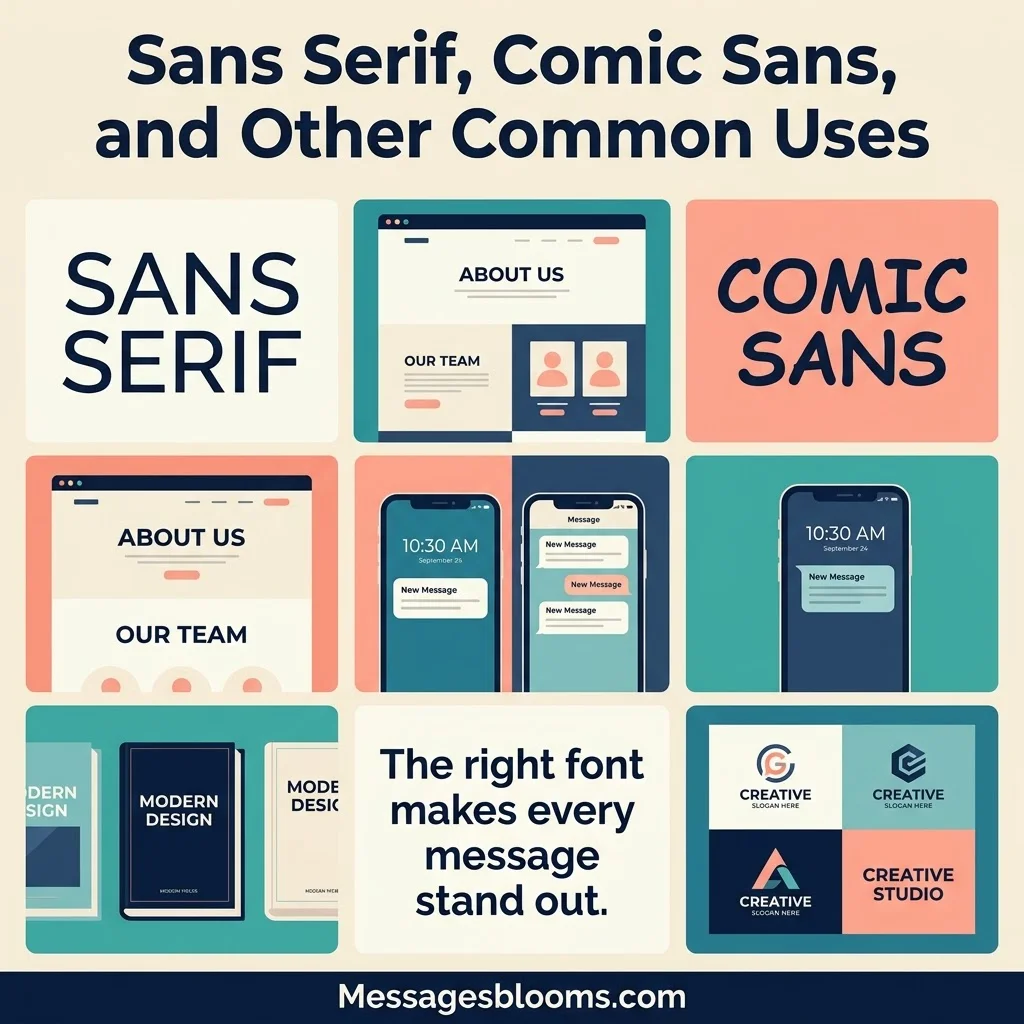
The word also lives in the world of typography. Here, sans names a type of typeface.
A serif is a small stroke at the end of a letter’s main line. Times New Roman has serifs. A sans serif font has none, so the letters look clean and plain.
As a noun, this sense of sans dates to about 1909. That is why font lists include names like Arial and Helvetica, which are sans serif fonts.
Comic Sans is the best-known example. Designer Vincent Connare created it, and Microsoft released it in 1994. People still debate it today.
Designers pick sans serif fonts for screens and signs. The simple shapes are easy to read at small sizes.
A few rhyming words can help you remember the sound. They include plans, fans, cans, and clans.
FAQs
What does sans mean in English?
In English, sans means “without.” It is a preposition with a literary or playful tone. You might see “salad sans dressing” on a menu. Most people say “without” in everyday talk.
What is the actual meaning of sans?
The actual meaning of sans is “without” or “in the absence of.” It comes from the Latin word sine. The word says that something is missing, such as “coffee sans cream.”
What does sans mean in French?
In French, sans also means “without.” It is an everyday word there. Examples include “sans sucre” (no sugar) and “sans doute” (without a doubt). English borrowed the word from French.
Does sans mean “without”?
Yes, sans means “without.” The only difference is tone. Sans sounds stylish or humorous, while without sounds natural and plain. Both have the same definition.
How do you use sans in a sentence?
Place sans before a noun. For example: “She ordered pasta sans cheese.” Use it in light, casual writing, and avoid it before -ing verbs. In those cases, choose “without.”
Conclusion
Now you know the sans meaning. It is a short French word for “without,” and English has used it for about 700 years. Use it for a touch of style, and keep “without” for everyday talk.

Sohail John is a creative SEO content writer who crafts engaging, humorous, and audience-focused digital content. He specializes in writing viral blog posts, catchy headlines, and social media captions that attract readers and improve search engine performance. His writing style combines clarity, creativity, and entertainment to deliver high-quality content that boosts engagement and builds strong online presence for websites and brands.