You tell a story, wander off, then catch yourself. That is the moment people say “I digress.”
The meaning of “I digress” is simple: you drifted off topic and now you’re heading back. Here is how it works, where it came from, and how to use it well.
Table of Contents
What Does I Digress Meaning?
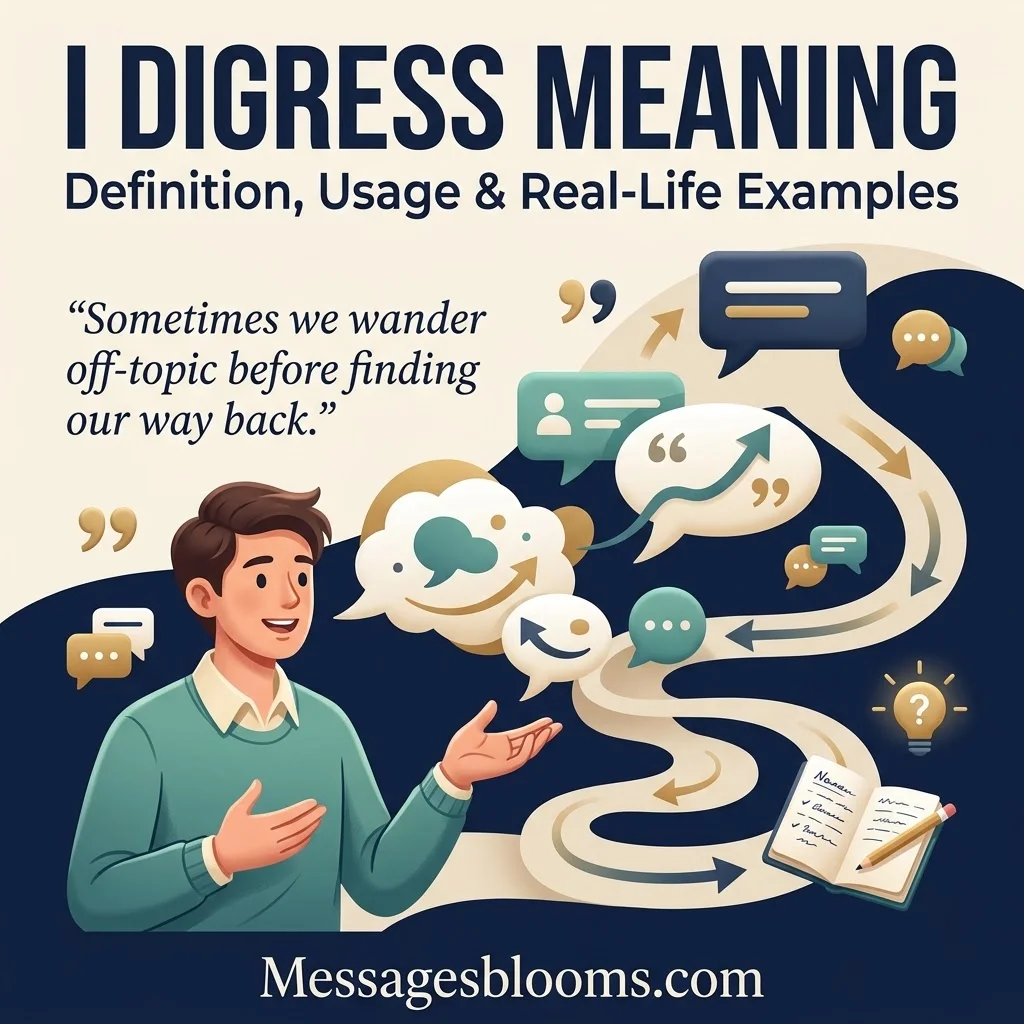
“I digress” means “I went off topic.” It also tells the listener you plan to return to your main point.
The root is the verb digress. Merriam-Webster and Cambridge Dictionary both describe it as moving away from the main subject in speech or writing.
Think of a road trip. Your main topic is the highway. A side story is a scenic detour. “I digress” is the sign that says you’re merging back.
“But I digress” is the most common version. It means the same thing, and it often sounds a bit funnier.
The word has old roots. Etymonline traces digress to the Latin digredi, “to step aside.” It entered English in the early 16th century.
The word family is easy to learn:
Digress is the verb.
Digression is the noun.
Digressed and digressing are the past and present forms.
Digressive is the adjective.
Say it like this: dye-GRESS. The stress falls on the second syllable.
Why do people use it? It shows self-awareness. It tells others, “I know I wandered.” That small signal keeps a conversation smooth.
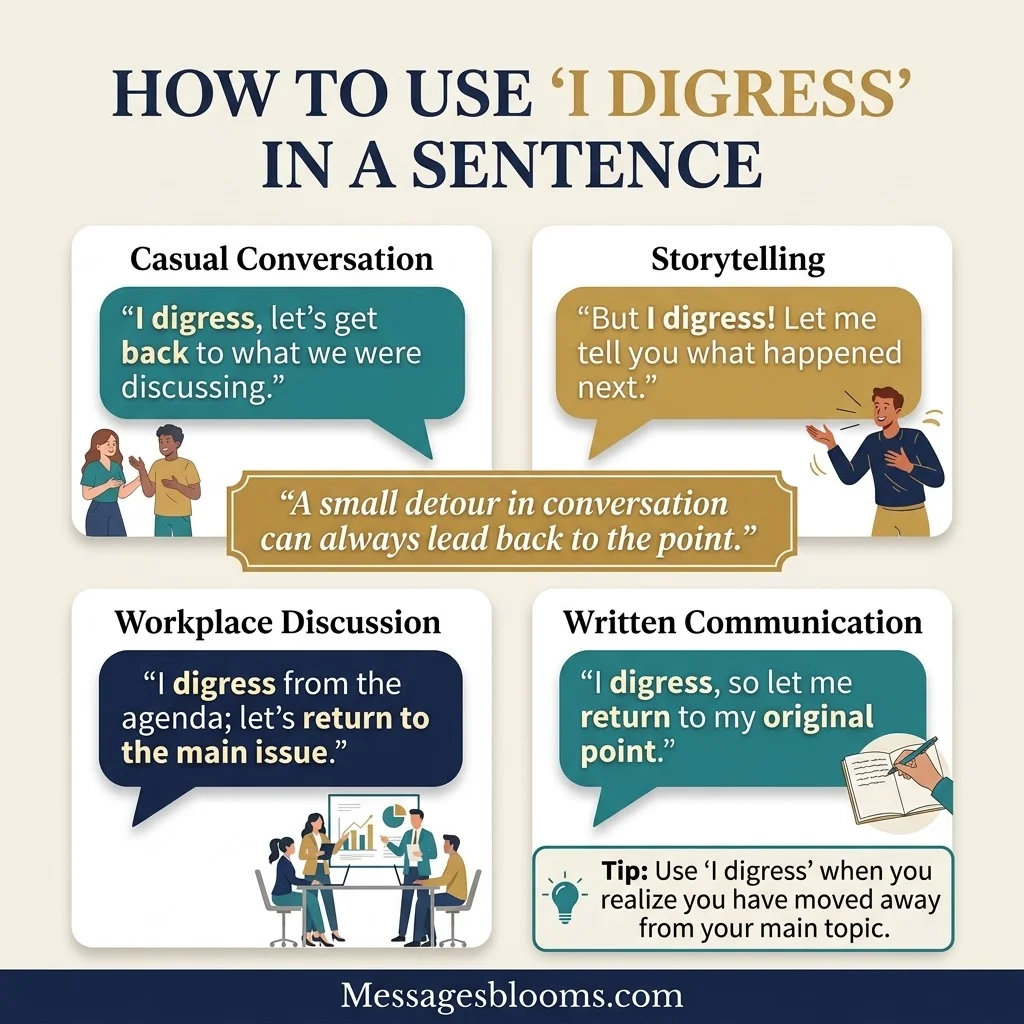
How to Use “I Digress” in a Sentence
Use it right after a tangent, then return to your point. The pattern is easy: main topic, side story, “I digress,” back to the main topic.
Here is one example: “We need a new logo. My first designer taught me everything about fonts. I digress. Let’s pick a color.”
Punctuation is flexible. You can use a period, a comma, or a dash:
“I digress. Let’s start the meeting.”
“That story is long, but I digress.”
“The food was great — the dessert deserves its own review — but I digress.”
Is “I digress” formal? Partly. Cambridge and Oxford Learner’s Dictionaries label the verb formal. Yet Americans use the phrase casually all the time.
Tone depends on the setting:
At work: It sounds polished. Use it sparingly in meetings and presentations.
In email or Slack: A direct line like “Back to the main issue” is often cleaner.
In texts and captions: It sounds playful, especially with an emoji.
In speeches and storytelling: It acts as a signpost phrase. It tells the audience you’re returning to the plot.
A word on grammar: digress is an intransitive verb. It doesn’t take an object. Say “I digressed from the topic,” not “I digressed the topic.”
“I Digress” Examples in Everyday Conversations
Examples show the definition of “I digress” at work. Each one below fits a different tone.
Friends talking:
“I went to buy socks and left with a toaster. Don’t ask. I digress. Are you coming Friday?”
At work:
“Sales are up this month. I could list every reason, but I digress. The big win is the new onboarding.”
In a meeting:
“Before the budget, a quick story about our old vendor… I digress. Let’s open the numbers.”
Storytelling:
“My grandfather ran a tiny diner. I digress. One morning, a stranger walked in with a suitcase.”
In a text message:
“I need to quit buying coffee every day 😂 I digress. Noon still works?”
Social media:
“Best pizza in the city is in a gas station, but I digress.”
The phrase also shows up in pop culture. Fall Out Boy used it in a 2007 song. Stand-up comedians like Maz Jobrani use it for comic timing. You’ll also see it in New Yorker cartoons, podcasts, and TikTok storytimes.
What if someone says it to you? Keep it easy. Try “No worries, go on,” or “That story was fun. So, what’s the main point?” Both keep the chat friendly.
Understanding the meaning of “I digress” can help you express yourself more clearly and recognize when a conversation shifts away from its main point. Similarly, learning the meaning of FTM in different contexts can help you understand this abbreviation and how it is used in everyday conversations and online discussions.
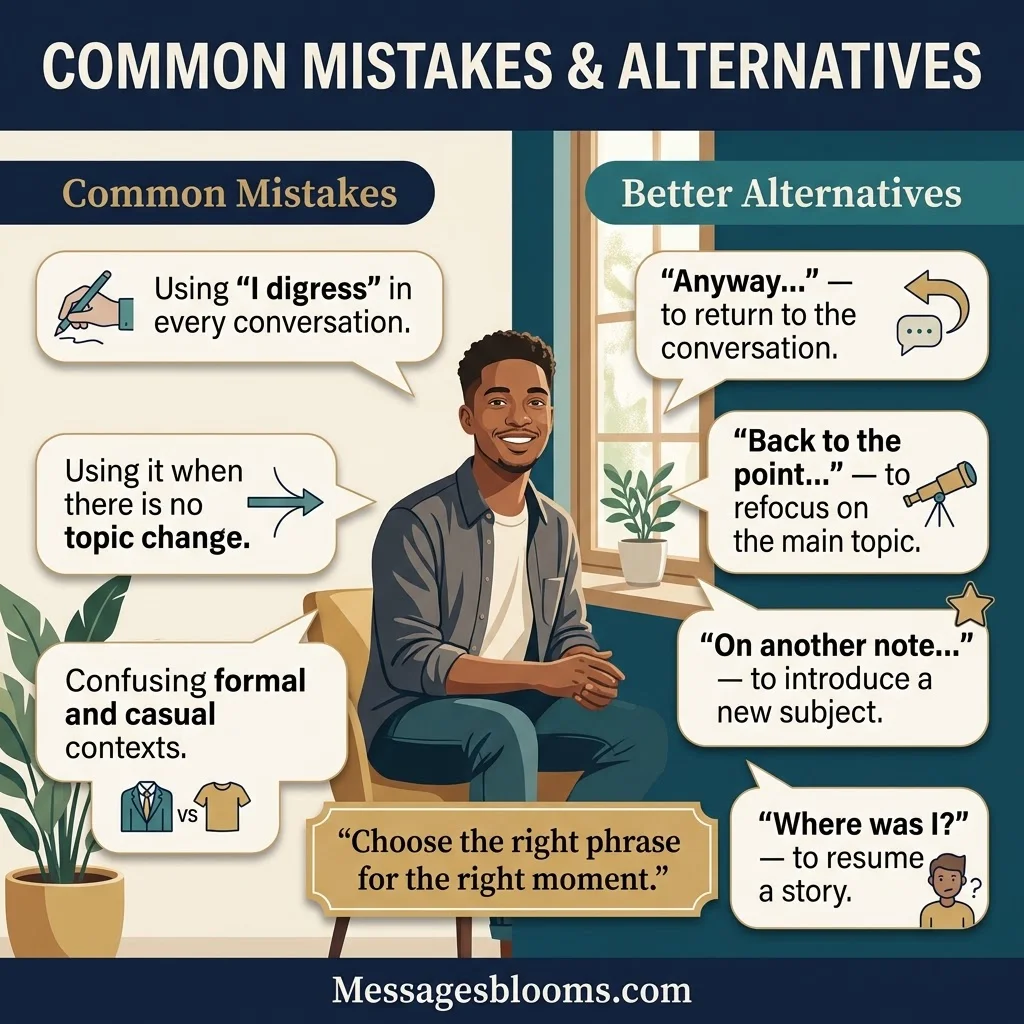
Common Mistakes and Alternatives to “I Digress”
A few small slips can make the phrase sound off. Here are the main ones.
Mixing up digress and disagree. They sound alike but mean different things. Digress means to leave the topic. Disagree means you hold a different opinion.
Using it when you never left the topic. If you stay on subject, the phrase feels forced.
Overusing it. Say it after every small aside, and the joke wears thin.
Using it in an argument. A line like “You’re upset, but I digress” can sound dismissive.
Sometimes another phrase fits better. Here is a quick guide:
Phrase
Meaning
Tone
Best Use
I digress
I went off topic
Polished, light
Stories, talks
But I digress
Off topic, now returning
Funny
Casual chat
Anyway
Moving on
Casual
Everyday talk
I got sidetracked
I lost my thread
Casual
Friends, family
Back to the point
Returning to the topic
Direct
Meetings
Where was I?
Finding my place
Warm
Long stories
Related words are easy to confuse. A tangent is the side topic itself. A digression is the act of leaving the main topic. An aside is a brief remark. A segue is a smooth link from one topic to another. The opposite idea is to stay on topic.
One more point: a digression isn’t always bad. A short detour can add color or context. A long one can lose your reader. See this overview of digression for how writers use it on purpose.
FAQs
What does “I digress” mean in simple words?
“I digress” means “I went off topic.” You say it after a side story. It tells people you know you wandered and plan to return to your main point.
What is the meaning of “I digress” in English?
In English, “I digress” means you have moved away from your main subject. It comes from the verb digress, from Latin digredi, “to step aside.” People use it in both speech and writing.
What does “I digress” mean in a conversation?
In a conversation, it signals a return to the original topic. It shows self-awarenessand often adds a little humor. It works like a polite “anyway,” but it names the detour first.
How do you use “I digress” in a sentence?
Say it right after a tangent, then go back to your point. For example: “The party was fun, and the cake was amazing. I digress. Did you finish the report?” You can also say “but I digress.”
What are some examples of “I digress” in everyday conversations?
“I bought shoes and a jacket, but I digress. Did you finish the assignment?”
“Great pasta. Better dessert. I digress. Book a table.”
“We need to hire someone, and I could rant about last year’s hiring, but I digress.”
Conclusion
“I digress” is a small phrase that does a big job. It admits a detour, adds a touch of humor, and brings the talk back on track. Use it when you truly wander, keep it light, and you’ll sound natural and clear.
Sohail John is a creative SEO content writer who crafts engaging, humorous, and audience-focused digital content. He specializes in writing viral blog posts, catchy headlines, and social media captions that attract readers and improve search engine performance. His writing style combines clarity, creativity, and entertainment to deliver high-quality content that boosts engagement and builds strong online presence for websites and brands.