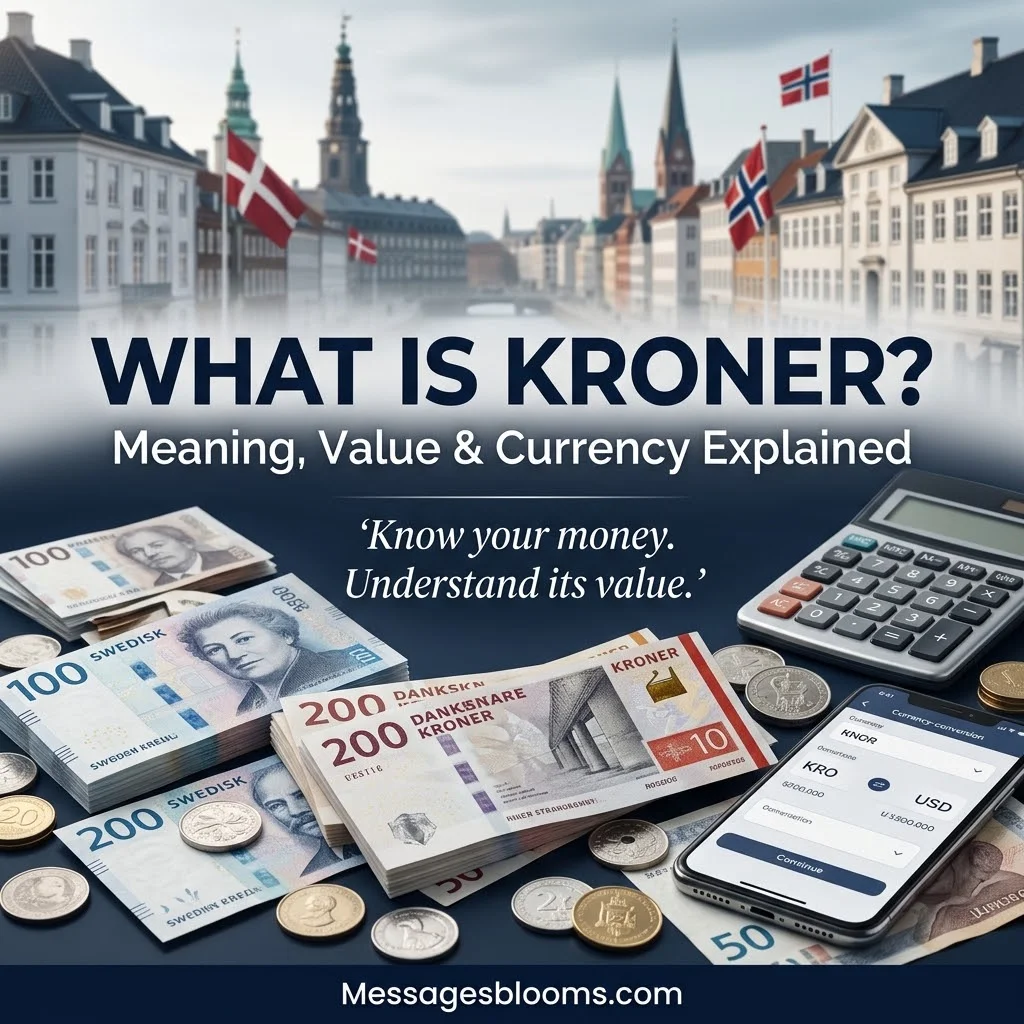
What is kroner? It is the plural of krone, which means “crown.” Norway and Denmark both use it as the name of their national money.
Picture a menu in Oslo that says “250 kr.” Is that dollars? Is it Danish or Norwegian money? This guide clears that up fast, with the kroner meaning, the countries, the value in USD, and travel tips.
Table of Contents
What Is Kroner and What Does It Mean?
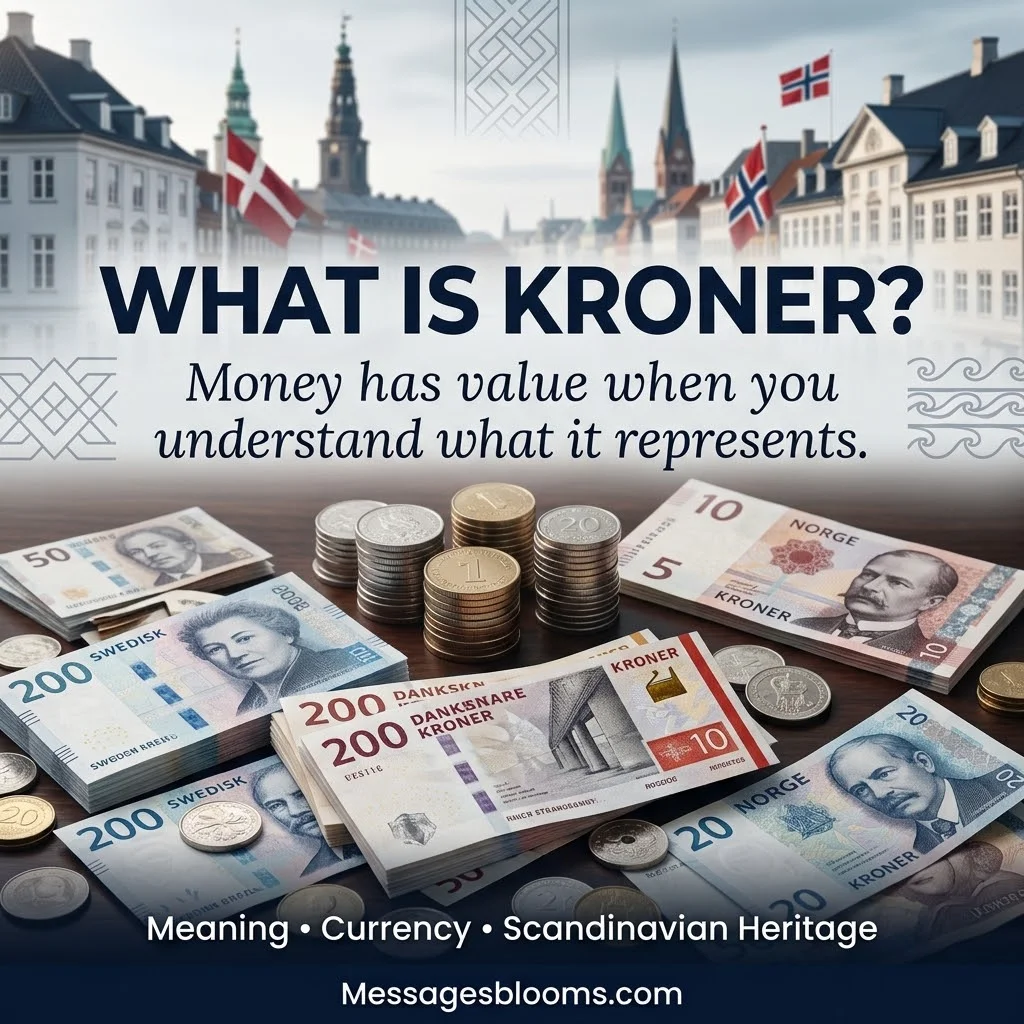
Kroner is simply “crowns” in Danish and Norwegian. One coin or note is a krone. Two or more are kroner.
The word comes from the Latin corona, meaning crown. Scandinavian kingdoms used it to link their money to royal power. You say it KROH-ner, and it rhymes with “owner.”
Think of it like “dollar” and “dollars,” with one big twist. There is no single kroner currency. Each country runs its own krone, with its own value and its own central bank.
Casual speakers sometimes use “kroner” as slang for cash, much like “bucks.” You may also meet it as a German surname, Kroner. For money questions, the currency meaning is the one that counts.
Which Countries Use Kroner Currency?
Two countries use kroner as their official currency, and two more use close cousins. The table shows all four.
| Country | Currency | Plural | ISO code | Central bank |
|---|---|---|---|---|
| Norway | Norwegian krone | kroner | NOK | Norges Bank |
| Denmark | Danish krone | kroner | DKK | Danmarks Nationalbank |
| Sweden | Swedish krona | kronor | SEK | Sveriges Riksbank |
| Iceland | Icelandic króna | krónur | ISK | Seðlabanki Íslands |
Greenland and the Faroe Islands also use the Danish krone. The Faroes print their own notes, but those are pegged one-to-one with Danish money.
Why do they share a name? Sweden and Denmark formed the Scandinavian Monetary Union in 1873, and Norway joined in 1875. The union fell apart around 1914. Each country kept the name and ran its own money.
Iceland brought in its own króna in 1918. The Czech Republic uses a distant cousin, the koruna (CZK), which also means “crown.”
One more fact trips people up. Denmark and Sweden are in the EU, but neither uses the euro. Norway is not in the EU at all.
Kroner Value: What Is a Kroner Worth in USD?
The kroner value depends on which krone you hold. A Norwegian krone and a Danish krone are not equal.
What is a kroner worth in dollars? Here is a rough guide.
- Norwegian krone (NOK): The 2026 average sits near 9.58 per US dollar, within a range of about 9.15 to 10.14. So 100 NOK is roughly $10.
- Danish krone (DKK): It trades around 6.5 per dollar, so 100 DKK is roughly $15.
- Swedish krona (SEK): It is closer to the Norwegian krone in value.
Why the gap? The Norwegian krone floats freely. It often rises when oil and gas prices climb, because energy is a big part of Norway’s exports.
The Danish krone is pegged to the euro through ERM II. Its central rate is 7.46 kroner per euro, and it can only drift within a narrow band. That makes it one of the steadier currencies in Europe.
Quick example: a 60 NOK coffee in Oslo costs about $6. A 300 DKK dinner in Copenhagen costs about $46. These are rough figures for 2026.
Rates move every minute. Check a live tool like XE or OANDA before you convert real money. Rates last checked: October 2026.
While exploring the meaning and origins of currency-related terms, you may also enjoy discovering the fascinating history behind names like Katz, including its cultural significance, symbolism, and intriguing origins.
Kroner for American Travelers: Tips and Common Mistakes

Most US visitors only need a few habits to avoid costly slip-ups. Start with these.
Never trust “kr” alone. Norway, Denmark, Sweden, and Iceland all use that symbol. Look for the three-letter code (NOK, DKK, SEK, or ISK) on bookings and receipts.
Don’t mix up Norwegian and Danish kroner. You cannot spend one in the other country. A bank, an ATM, or an exchange app must convert it first.
Don’t mix up kroner and kronor. Kroner is for Norway and Denmark. Kronor is Swedish.
Pay in local currency. If a card terminal asks whether to charge you in USD or kroner, choose kroner. The USD option, called dynamic currency conversion, usually carries a worse rate.
Expect rounding in Norway. Norway stopped circulating øre coins (one hundredth of a krone) in 2012. Cash totals get rounded to the nearest whole krone. Denmark still has a 50 øre coin.
Carry a card. Both countries lean heavily on cards and mobile pay. Cash is often optional.
When you write to a hotel or supplier, say “Norwegian kroner (NOK)” instead of plain “kroner.” It removes all doubt.
FAQs
What is kroner and what does it mean?
Kroner is the plural of krone, a word meaning “crown.” It is the name for money used in Norway and Denmark. The term comes from the Latin corona and reflects the royal history of Scandinavian currencies.
What is a kroner currency?
A kroner currency is any money named krone in the plural. The two main ones are the Norwegian krone (NOK) and the Danish krone (DKK). They share a name and a symbol, “kr,” but they are separate currencies with different values.
Which country uses kroner as its currency?
Norway and Denmark use kroner. Greenland and the Faroe Islands use the Danish version. Sweden uses krona (plural kronor), and Iceland uses króna (plural krónur). Those are close relatives, not kroner.
Is kroner the same as krone?
Yes and no. They are the same currency name in two grammar forms. Krone is singular, and kroner is plural. You write “1 krone” but “100 kroner,” just like “1 dollar” and “100 dollars.”
What is the difference between kroner and krone?
The only difference is quantity. Krone means one unit, and kroner means more than one. Neither word tells you the country. For that, check the code: NOK for Norway or DKK for Denmark.
Conclusion
Kroner is the plural of krone, and it is not one single currency. Norway and Denmark each run their own, so the code (NOK or DKK) tells you what your money is worth. Check a live rate, pay in local currency, and you will handle Scandinavian prices with ease.

Sohail John is a creative SEO content writer who crafts engaging, humorous, and audience-focused digital content. He specializes in writing viral blog posts, catchy headlines, and social media captions that attract readers and improve search engine performance. His writing style combines clarity, creativity, and entertainment to deliver high-quality content that boosts engagement and builds strong online presence for websites and brands.