TYSM means “thank you so much.” It is a quick texting abbreviation that adds warmth to a simple thanks.
Texting runs on speed, so short forms spread fast. This guide explains the TYSM meaning in texting, how its tone changes, how to reply, and when to skip it.
Table of Contents
What Does TYSM Meaning in Texting and Social Media?
TYSM is a short way to say thanks. You will see it in texts, DMs, comments, and group chats.
What does TYSM mean in text? It means “thank you so much.” It is an initialism, built from the first letter of each word: T, Y, S, M. It works as a gratitude marker. It sounds warmer than “ty” or “thanks.”
Why do people use TYSM? Because typing is slow on a phone. A standard SMS holds only 160 characters, so people compress common phrases. In a 2011 Pew Research Center survey, 73% of U.S. adult cell owners used text messaging. Texters averaged 41.5 messages a day. Adults aged 18 to 24 sent about 110 a day. That survey is older, but it shows why internet shorthand took off.
What does TYSM mean on social media? The meaning stays the same. It appears on Snapchat, TikTok, Instagram, Discord, and WhatsApp. Creators often write it under comments, like “TYSM for 10K followers!”
Does TYSM have another meaning? Not in everyday texting. If the letters appear in a work document, check how that document defines them.
How to Use TYSM in Text Messages and Replies
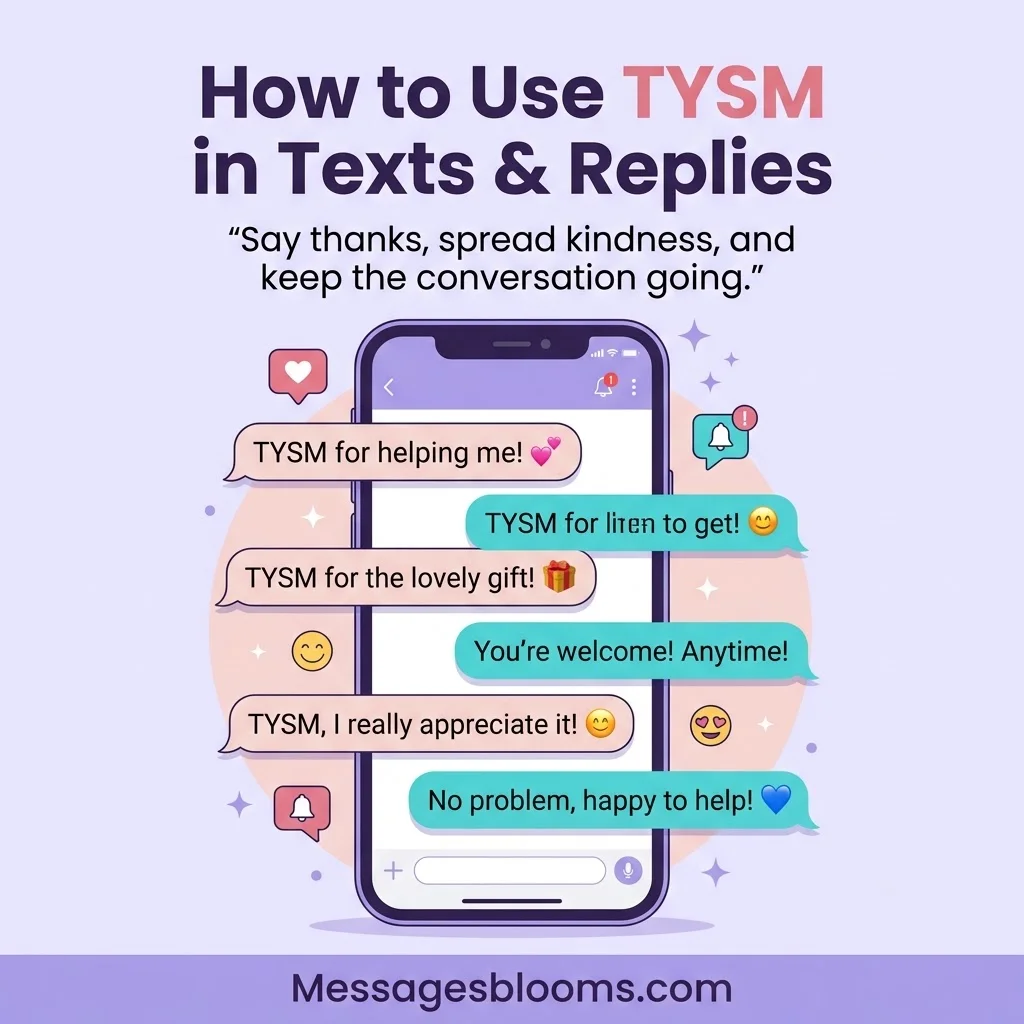
Use TYSM after help, a gift, a compliment, or a quick favor. Then match the tone to the moment.
Here are simple examples:
“TYSM! I really needed those notes.”
“tysm for picking me up, you’re a lifesaver.”
“Aww, TYSM! That means a lot.”
“Got the link, tysm.”
Tone changes the feel of the message. Is TYSM friendly or rude? Usually friendly. Context decides.
A friendly TYSM follows kindness or help.
A neutral TYSM just confirms you got something.
A sarcastic TYSM follows a complaint, like “You spoiled the ending, TYSM.”
Does TYSM mean something different from a girl or a guy? No. The meaning is the same. Is TYSM flirty? Not by itself. Other words and emojis create that tone.
Styling matters too. A lowercase “tysm” feels relaxed. “TYSM!!!” feels excited. Emojis make it warmer.
TYSM Meaning vs TYSFM, TY, and Other Thank-You Slang
TYSM sits in the middle of the gratitude shorthand scale. Some forms are shorter. Others are stronger.
Term
Stands for
Feel
TY
Thank you
Quick and mild
THX
Thanks
Very casual
TYVM
Thank you very much
Warm, a bit more polite
TYSM
Thank you so much
Warm and friendly
TYSFM
Thank you so freaking much (the common reading)
Intense and very casual
TIA
Thanks in advance
Used before the favor
What is the difference between TYSM, TYSFM, and TY? TY is the basic thanks. TYSM adds emphasis. TYSFM is slang with no fixed rule, and users read it as a stronger, rougher version of TYSM. Keep it for close friends.
TIA is different. People use it before someone helps. TYSM comes after.
Just like TYSM, many texting abbreviations have different meanings depending on the context. Another popular example is MBN meaning in texting, which can express different ideas in casual conversations, business discussions, and technology-related contexts.
How to Respond When Someone Texts TYSM
A short reply is enough. Match their energy.
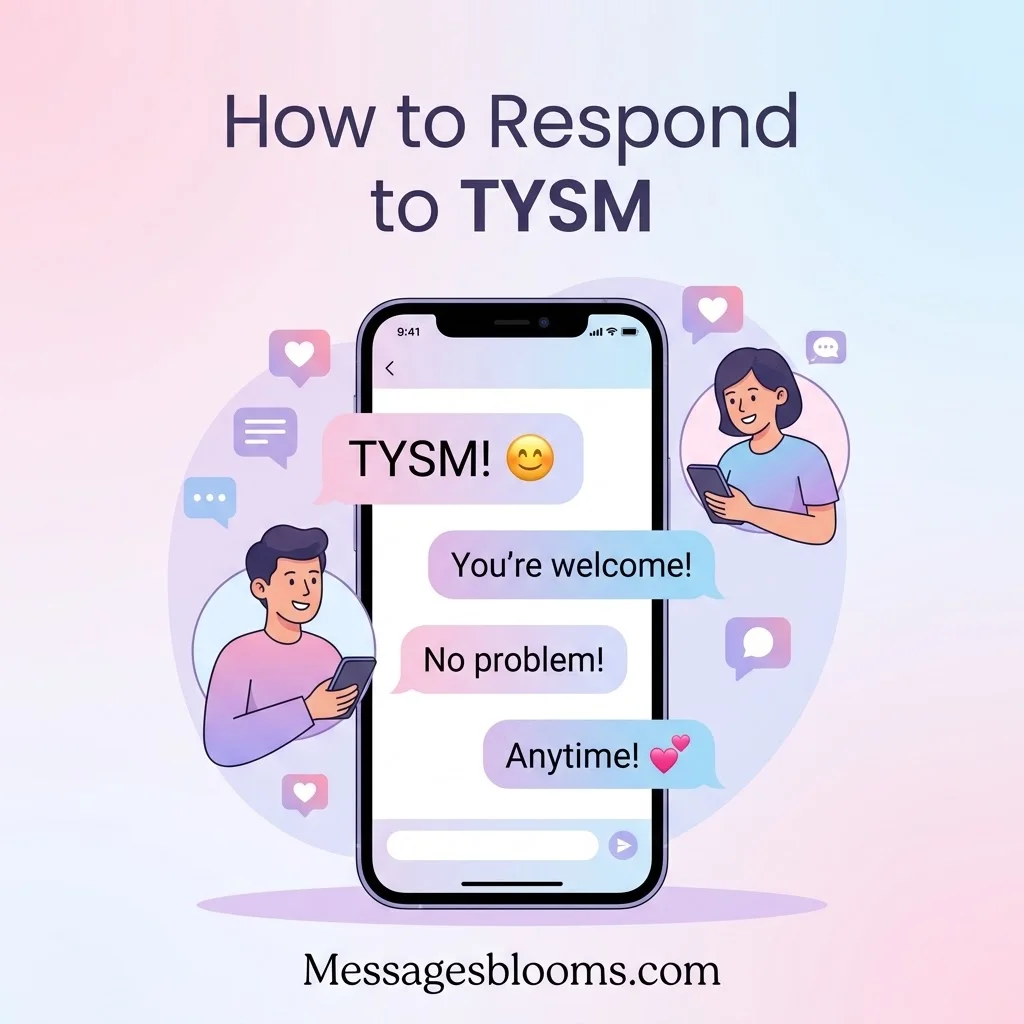
How do you respond when someone texts you “TYSM”? Say “you’re welcome” in a casual way. Add warmth if you know the person well.
Casual: “No problem!” or “Anytime!”
Friendly: “Happy to help, glad it worked out!” or “Of course, I’ve got you.”
Professional: “You’re very welcome. Let me know if you need anything else.”
If the thanks follows big help, say a little more. A one-word reply can feel cold.
Is TYSM Formal or Casual for Work Messages?
TYSM is informal. It fits friends, classmates, and close teammates.
Is TYSM formal or informal? Informal. Is TYSM okay in professional work emails? Usually no. Some readers may not know the abbreviation. Others may find it too casual. Write the full phrase instead.
Better options for work:
Thank you so much for your help.
I really appreciate your time.
Many thanks for the quick reply.
A casual team chat can be an exception. If your coworkers already use slang, a quick “tysm” is fine. When you are unsure, spell it out. Skip it in cover letters, client emails, and messages to someone senior.
FAQs
What does TYSM mean in texting and social media?
TYSM means “thank you so much.” People use it in texts, DMs, and comments to show warm thanks quickly.
What is the difference between TYSM, TYSFM, and TY?
TY means “thank you.” TYSM means “thank you so much” and sounds warmer. TYSFM is a stronger slang version, usually read as “thank you so freaking much,” and best kept for close friends.
How do you respond when someone texts you “TYSM”?
Reply with “no problem,” “anytime,” or “you’re welcome.” Add a friendly line if you know the person well.
Is TYSM formal or informal, and is it appropriate for professional work emails?
TYSM is informal. In professional emails, write “thank you so much” instead.
What does TYSM mean when typed in all lowercase versus capital letters?
The meaning stays the same. Lowercase “tysm” feels relaxed. Capital “TYSM” feels more excited, and extra exclamation marks add even more energy.
Conclusion
The TYSM meaning in texting is simple: “thank you so much.” It adds more warmth than TY or thanks, and it fits chats with friends, family, and online followers. Tone depends on capitalization, punctuation, emojis, and what happened just before the message. Sarcasm is the one trap, so read the context first. In formal emails, write the full phrase and let TYSM stay in your casual texts.
Sohail John is a creative SEO content writer who crafts engaging, humorous, and audience-focused digital content. He specializes in writing viral blog posts, catchy headlines, and social media captions that attract readers and improve search engine performance. His writing style combines clarity, creativity, and entertainment to deliver high-quality content that boosts engagement and builds strong online presence for websites and brands.